Broadband ISP Voneus Criticised for Leaving Rural Brecon Homes Disconnected | ISPreview UK

Original article ISPreview UK:Read More

Alternative rural UK broadband network Voneus has been criticised after a network fault resulted in two premises in villages near Brecon (Wales) losing connectivity, which by itself wouldn’t be a huge development. But in this case, the provider later chose to “decommission” the service rather than repair it, leaving those affected offline.

Just to recap. Voneus has been struggling a bit recently with complaints in some areas about network performance (here and here), redundancies and a slowdown in their network roll-out (here). This came after the operator also found itself having to withdraw from their publicly funded Project Gigabit broadband contract for Mid West Shropshire (here), which has since been picked up by Openreach (here). But a recent funding deal appeared to signal a potential improvement for the future (here).

NOTE: Voneus has received investments from Macquarie Capital, the Israel Infrastructure Fund (IIF) and Tiger Infrastructure Partners (principal shareholder of Rural Broadband Solutions) etc. The operator originally aspired to cover 370,000 homes with their gigabit networks, but they’ve so far done 100,000 (Feb 2025) and are home to 23,000 customers (Nov 2025).

Unfortunately, Voneus has now come under fire for how they’ve handled the recent loss of service around part of remote rural Brecon. According to the Brecon & Radnor Express, the disruption is currently known to have impacted two households, including Chris Davies from Cwmachau Farm in Lower Chapel, who claims to have received no warning and that monthly payments were still being taken.

We have a holiday enterprise on the farm and emails and spreadsheets are essential 100 per cent of the time. Wi-Fi is also needed for the holiday accommodation,” said Chris. “The last six months have proved disastrous with Voneus, with a slowing down of the service, outages one after the other, and guarantees to repair which never took place.” The service is then said to have “disappeared altogether” in October.

The outage is understood to have been caused after an Army vehicle, which was allegedly said to be travelling down an unauthorised road, somehow damaged a power cable. But apparently the cost and complexity of restoring the service has now been deemed too high.

A spokesperson for Voneus said:

“As a business we always striving to keep customers connected. Third-party damage caused a broadband outage for two customers. After confirming all alternative solutions were not viable, Voneus made a decision to de-commission. Customer communications were sent to all impacted residents from the outset.”

Local Councillor Iain McIntosh, who said he helped to establish the original network in 2018, commented that it is “completely unacceptable for a broadband provider to simply switch people off rather than repair and maintain the service they pay for“.

At the time of writing it’s unclear whether both homes might be able to access a 4G or 5G based mobile broadband service as an alternative, but consumers in such areas can often access ultrafast broadband via Starlink’s satellite network in Low Earth Orbit (LEO), although this does tend to be a bit more expensive.

Spacecoin to Launch Broadband Satellites for Decentralised Starlink Alternative UPDATE | ISPreview UK

Original article ISPreview UK:Read More

A new company called Spacecoin, which aims to build a “decentralised” alternative to Starlink’s global mega constellation of ultrafast broadband satellites in Low Earth Orbit (LEO), will today attempt to launch three satellites from Vandenberg Space Force Base as part of its mission to extend internet connectivity to the 2.6 billion people globally who remain offline.

The new network aims to deploy a constellation of small satellites (CubeSats) into LEO that will eventually deliver global reach, albeit while also being able to operate independently of terrestrial infrastructure. This approach is designed to ensure reliable access even during natural disasters, government restrictions (there’s a strong focus on delivering “censorship-resistant internet access“), and in remote or geographically challenging regions where traditional internet connectivity may fail.

NOTE: The new blockchain-enabled nano satellites will harness a 5G based Non Terrestrial Network (NTN), which can be used to connect with mobile devices on the ground.

The technical specifications and network capability goals of the new network remain a little unclear, although Spacecoin has already launched one prototype 8U (2×4U) CubeSat (CTC-0) into orbit. The next batch of three additional satellites (CTC-1 constellation) were due to launch today and will be used to conduct pilot tests with partners in Africa and Southeast Asia.

The CTC-1 satellites will adopt the larger and heavier 16U CubeSat standard to support their more advanced capabilities, whatever those may be. But the first commercial services aren’t expected to go live until sometime in 2026, which seems set to be supported by further satellite launches to expand coverage and enable third-parties to deploy satellites that interoperate with their network.

While CTC-0 proved that blockchain transactions can be transmitted end-to-end through space, CTC-1 focuses on validating the network layer itself by testing seamless inter-satellite handoffs and direct in-orbit data exchange. Once these capabilities are successfully demonstrated, Spacecoin will be ready to begin connectivity trials with government and telecom partners worldwide,” said the announcement.

Tae Oh, Founder of Spacecoin, said:

“This launch marks the next frontier for decentralised connectivity. With multiple satellites now in orbit, we’re proving that internet services need not be centralised. This is a step toward a world where connectivity is global, permissionless, and impossible to switch off.”

A key component of this new architecture is Starmesh, Spacecoin’s Virtual Satellite Network (VSN), which claims it will enable private, censorship-resistant browsing by routing data across both orbital and terrestrial nodes without requiring a central provider. Starmesh is currently in development, with early functionality expected to be tested over the “coming months“.

In the coming months, Spacecoin will also conduct ground demonstrations and expand partnerships with regional and institutional stakeholders across Africa and Asia, who are exploring decentralised satellite technologies to connect rural and hard-to-reach regions more efficiently than traditional infrastructure. But the longer-term goal is to expand that reach across the world.

UPDATE:

ISPreview has since spoken to Spacecoin about the new network’s capabilities. At present, they claim it’s still “too early” to give accurate numbers for network speeds and capacity, although they’re targeting SMS, messenger apps, calls, internet browsing, crypto transactions, and IoT over data as the primary starting point. This is a lifeline solution for areas without internet access, so the focus is bringing these basic necessities online.

The new network also won’t be able to connect with unmodified Smartphone’s like the systems that Starlink (Direct to Cell) and AST SpaceMobile have built, although we’re told this is mainly due to spectrum regulatory limitations rather than technical ones.

The satellites themselves do pass over Europe, although coverage in that area will depend upon whether the operator can secure landing rights. Finally, the company says at least 60 satellites are needed for it to achieve global coverage, but “many thousands would be required for decent capacity“. The aim is thus to put Spacecoin’s software into other satellites too, so they’re not the sole owner/operator.

UPDATE 7:22pm

Unfortunately, SpaceX have had to scrub the launch. The next attempt will be on Friday 28th November.

Chair of ISPA Steve Leighton on Solving the UK’s Full Fibre Take-up Problem | ISPreview UK

Original article ISPreview UK:Read More

The Strategic Advisor for fibre supplier Altnets and Chair of the UK Internet Service Provider’s Association (ISPA), Steve Leighton, has made a number of recommendations on how he believes the broadband sector can address one of its “most pressing challenges” – low adoption of full-fibre services despite expanding network coverage.

At present around 88% of UK premises can already access a gigabit-capable broadband network or 78% when only looking at Fibre-to-the-Premises (FTTP) technology (here). Ofcom separately forecasts that gigabit coverage could rise to somewhere between 91% and 97% of homes by January 2028 (here).

NOTE: The government’s Project Gigabit currently aims for 99% of UK premises to be reached by gigabit-capable broadband by 2032.

Network coverage is thus one of the most common and familiar measures when assessing progress, but in a market under so much economic strain (e.g. rising build costs and high interest rates) – and filled with so many competitive network operators (i.e. overbuild this means splitting customers between several competing networks) – it’s also very important to understand the impact of customer take-up.

The challenge was recently underlined by a new report from Enders Analysis (here), which reported that the average FTTP network penetration rate across the industry now stood at about 15% (up slightly from 12% in 2023). Some providers are doing much better on this front than others, but take-up is clearly still a weak area for many providers.

Steve’s view is that some of the core problem areas stem from the issues of public understanding and perception. Part of this, says Steve, stems from a long history of confusing advertising (i.e. describing “part-fibre” services like FTTC as “fibre broadband“, which then makes it harder to sell true “full fibre” because consumers think they already have it). The other part is the issue of brand reputation.

Steve Leighton said:

“A reluctance to move to a provider customers don’t feel familiar with continues to limit take-up across multiple altnets. Adoption is being hindered by worries over service dependability as well as low exposure and mistrust of challenger businesses. Smaller operators need to demonstrate the reliability of their networks and the legitimacy of their brand in a market still dominated by long-standing incumbents.”

Steve goes on to state his view that the benefits of full fibre are also not being felt equally: “Exclusion still exists on a large scale and can be broken down into three categories: economic, where households are unable to pay for the connectivity they need; geographic, where availability is limited by remoteness and the accompanying lack of infrastructure; and educational, where there is a lack of knowledge about options or technology.”

The issue of consolidation also crops up, with Steve pointing out that this helps by delivering the “scale needed to boost operations and attract investment“, although he warns that its advantages may not become apparent “unless it enhances rather than detracts from the customer experience … Any decline in service quality during or after consolidation poses the danger of undercutting the sector’s hard-won momentum, slowing adoption, and damaging credibility.”

Finally, Steve makes a series of recommendations, which can be summed up as follows.

The Recommendations

1. Modify the industry’s marketing strategy to ensure communications are clear, accessible and centred on what full fibre legitimately offers rather than just what it is. “This entails emphasising the practical advantages, such as improved tools for businesses, stronger communities, faster connectivity, and a more competitive UK economy. On the other hand, using semi-technical terminology and headline speeds simply turns off customers“.

2. Introduce a strong national education campaign to “guarantee” that every community is aware of and able to utilise the advantages of next-generation connectivity.

3. Move beyond isolated local [skills training] programmes, replacing them with a strategy that “guarantees everyone has access to meaningful and continuous digital training“, regardless of circumstance. [Some] 10.2 million UK adults, roughly 20% of the population, are unable to complete all eight basic “Foundation” digital tasks, such as logging into a device, according to the House of Lords Communications & Digital Committee.

4. Economic exclusion is a significant obstacle, with 1.9 million households struggling to afford broadband. For individuals in need, social tariffs offer some help, but affordability goes beyond monthly expenses. “Without the technology needed to use it, having access to the internet is useless, and many families are still unable to engage in the digital world fully.”

While regional and siloed initiatives exist to address this, Steve suggests there is a “strong case for a coordinated national approach that ensures equitable access to both connectivity and the tools needed to make use of it“.

Steve makes plenty of fair and valid points above, although as always the challenge stems from converting such views into practical actions. At the same time, we’d disagree that using “headline speeds” turns off customers, since it’s one of the few practical ways in which the performance differences can be clearly and simply communicated to consumers.

We’d also add that today’s market is an incredibly confusing mix of multiple different networks, with different levels of coverage and ISPs that sell packages across those many different networks, often with different price points and features for each one. Consolidation thus isn’t just about the core business case, it will also hopefully bring some much-needed simplification to an already terribly confusing market. But that may take a few years.

Altnet Broadband ISP Connect Fibre Launch Netgem’s New PLEIO UK TV Box | ISPreview UK

Original article ISPreview UK:Read More

Alternative broadband operator and UK ISP Connect Fibre, which has been rolling out their gigabit-capable full fibre (FTTP) network across the East of England, have today become the latest internet provider to make Netgem TV‘s new PLEIO IPTV set-top-box and streaming service available via their TV bundles. The new kit is both more powerful and supports the new Freely live TV streaming service.

As with the prior announcement from Brsk, this news won’t come as much of a surprise because Netgem TV already revealed that Connect Fibre would be one of the first ISPs to adopt PLEIO as part of last week’s launch (here). But at the time, the ISP hadn’t yet made the new hardware and service available to their customers, which changes today.

Connect Fibre TV, powered by Netgem PLEIO, will be available for £10 per month – and included within a range of value-packed broadband bundles. Alternatively, anybody can buy PLEIO at retail via Amazon for £99, but this doesn’t include their optional service subscription for premium channels and games (an extra £9.99 monthly if you buy the hardware at retail). The catch is that, due to high demand, the new box is currently out of stock via Amazon.

Stefan Stanislawski, CEO of Connect Fibre, said:

“We’re thrilled to join forces with Netgem to offer PLEIO and deliver a complete ‘all things streaming’ promise to our Fibre Broadband customers. We are particularly excited to offer for the first time access to all broadcasters channels alongside streaming apps to the younger segments that also enjoy watching our great British shows on national television, live or catch-up. Connect Fibre TV means complete entertainment, and with our ultrafast Fibre Broadband coupled with our recently launched Wi-Fi 7 routers, our customers can enjoy the best entertainment experience for a fraction of the price of the main Pay-TV providers.”

Virgin Media UK Offers TV Customers Free Family Films in 4K Over December | ISPreview UK

Original article ISPreview UK:Read More

Customers of broadband ISP Virgin Media (O2), specifically those who also take a Pay TV service via one of their TV 360, Stream or v6 Box platforms, have today been told that they can enjoy a range of family favourite films in Ultra High Definition (UHD) at no extra cost through December 2025.

The move means that customers can access channels 175 and 999 (aka – Virgin TV Ultra HD) for an entire month, which will showcase family films every afternoon, as well as a variety of documentaries from 8pm and prime time films from 9pm daily. Some example content includes Hook, Spider-Man: Into the Spider-Verse, Hacksaw Ridge, Billy and Dom Eat the World and many more.

In addition, to help customers get into the spirit of the season, Virgin Media are also offering a dedicated channel – Great! Christmas (Chn 424) – to watch festive films, available until 6th January 2026.

David Bouchier, Chief TV and Entertainment Officer at VMO2, said:

“For so many of our customers this time of the year is all about coming together and spending quality time with loved ones. So, Virgin TV is gifting them the opportunity to unwind and watch their favourite films and shows together in UHD, at no extra cost this festive season.”

Openreach closes first exchange in PSTN switchoff milestone | Total Telecom

Original article Total Telecom:Read More

Press Release

Openreach plans to shut down 80% of its UK exchanges, saying it will only need 1,000 ‘super digital exchanges’ to serve the entirety of the UK

Openreach has exited the Deddington Exchange in Oxfordshire, making it the first of 4,600 exchanges across the UK to be fully de-commissioned as part of a nationwide shift from copper networks to digital full fibre infrastructure.

Deddington also becomes the first UK location to see the closure of BT’s copper based public switched telephone network (PSTN) – which uses copper wires to carry analogue voice signals, with end customers all upgraded to digital full fibre.

The rural exchange is the first of three pilot exchanges (the others being Ballyclare in Northern Ireland, and Kenton Rd in London) that are due to close by the end of November.[1]

The three exchanges are part of Openreach’s long-term plan to exit 4,600 exchanges. These are currently used to support traditional copper-based phone and broadband voice services and will no longer be required once customers have migrated to fibre. In addition to the three pilot exchanges, Openreach plans to exit a further 105 ‘priority exchanges’ by December 2030.

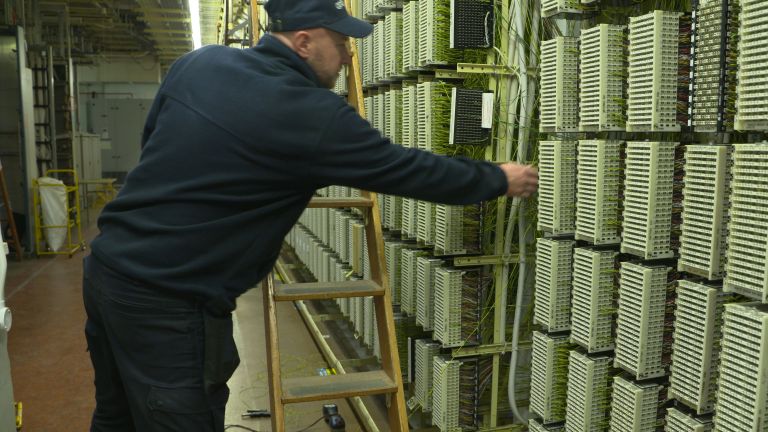
New digital networks use fibre cables and software-based switches. They need far less physical space than traditional copper-based analogue systems, which require large exchanges to house bulky switches and miles of copper wiring.

The move to digital will mean that Openreach needs just 1,000 ‘super digital exchanges’ – also called Openreach Handover Points (OHPs) – to serve the whole of the UK. On average each OHP replaces 4-5 traditional exchanges. Some OHPs may replace ten or more exchanges – especially in urban areas with high full fibre penetration.

In Deddington, around 1,800 copper lines providing connectivity to local homes and businesses, have now been upgraded to full fibre, with those new digital lines now served and managed by nearby Banbury Exchange – one of Openreach’s new ‘super digital exchanges.’

Closing an exchange and migrating affected customers is a highly complex process, which typically takes around 4-7 years – depending on the size and complexity of each exchange. Openreach announced plans to exit Deddington in 2020, allowing Communication Providers (CPs) to assess legacy equipment and to start notifying customers.

The physical migration of all customer services out of the Deddington exchange took around 26 months, starting with the halting of the sale of traditional copper-based Wholesale Line Rental (WLR)[2] products and services, in September 2023. Openreach worked closely with CPs to overcome the challenges of identifying lines serving Critical National Infrastructure (CNI) – helping to upgrade everything from traffic light control systems, payment terminals, lift emergency lines, as well as working to safely migrate vulnerable customers and ensuring telecare and telehealth devices work over new digital lines.

James Lilley, Openreach’s Managed Customer Migrations Director, said: “Closing thousands of ‘legacy’ exchanges is a major undertaking, with several million services needing to be migrated. Deddington has served as a proof of concept, demonstrating our ability to decommission legacy exchanges safely, securely, and collaboratively.

“Moving to this new digital world will ultimately benefit everybody. CPs will be able to serve their customers from fewer exchanges, helping to save costs through consolidation of equipment and reduced space and power requirements. And millions of end users will benefit from more reliable and faster fibre-based services – that will be scalable for decades without needing major upgrades.

“It’s not just about switching off old kit—it’s about building a future-proofed, simpler network for the UK.”

With the switching off of legacy services in Deddington now complete, Openreach will continue to work with CPs to remove physical equipment over the next few months to ultimately vacate the building. Teams will assess and re-purpose selected assets, either for use as critical spares across the network or for resale, contributing to sustainability and cost-efficiency.

Keep up to date with all the latest telecoms news with the Total Telecom newsletter

Also in the news
Connected Britain Award winners 2025 announced!
Netomnia announces ‘powerful and ambitious’ rebrand ahead of Connected Britain
VodafoneThree drops Samsung, relies on Nokia and Ericsson for £2bn network upgrade

Openreach Officially Closes First Legacy UK Exchange – Deddington | ISPreview UK

Original article ISPreview UK:Read More

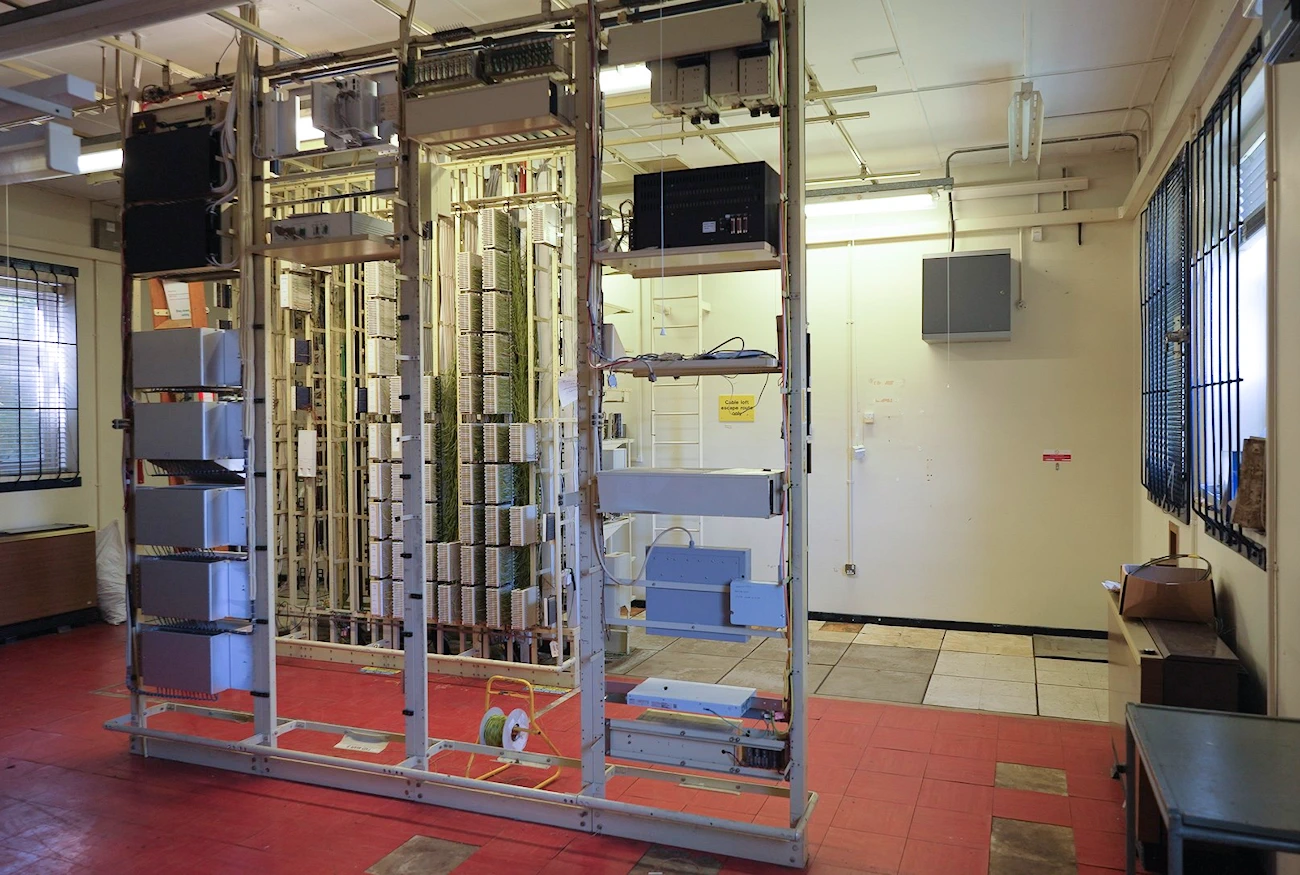
Network access provider Openreach (BT) has today confirmed that the first of their pilot programme of old exchange closures – Deddington (pictured) – has finally shut its doors and slightly ahead of schedule. The move also means that Deddington is the first UK location to see the closure of BT’s copper based Public Switched Telephone Network (PSTN).

Just to recap. The operator currently has c.5,600 UK exchanges, but only c.1,000 of these are needed to provide nationwide coverage of modern “fibre broadband” based services (FTTC, FTTP etc.) – the Openreach Handover Points (OHPs) or “Super Digital Exchanges“. However, the rollout of full fibre (FTTP) technology, combined with the retirement of copper lines and legacy services (ADSL, WLR etc.), will soon make it economically unviable to support both the old and new exchanges.

NOTE: Openreach previously predicted that, come 2025, the number of copper broadband customers being served by the old 4,600 exchanges would fall to just 1 million.

The operator has thus long since developed a gradual plan for closing the other 4,600 exchanges – known as the Exchange Exit Programme, which starts with an initial pilot of 3 exchanges and then extends to a closure of 105 “priority exchanges” by 2030 (i.e. taking place in four phases over the next 5 years), with the rest then following through the early 2030s.

Deddington is the first pilot exchange to close and also one of the network operator’s smallest – originally serving just 1,800 copper lines. The exchange was officially due to close on 28th November 2025, but it’s managed to achieve that a little ahead of schedule. The local area has now been upgraded to full fibre, with those new digital lines now served and managed by the nearby Banbury Exchange (OHP).

After this come the much larger Ballyclare in N.Ireland (9,500 premises) and Kenton Road in London (9,500 premises) exchanges, which were due to reach the same point just a few days later (aka – Network Cease Date). But as we reported over the weekend, the next two may take a bit longer to completely vacate due to problems with there still being too many active lines / customers (here).

Inside the Deddington Exchange

Openreach-Deddington-Exchange-Interior-Empty

Closing an exchange and migrating affected customers is a slow and extremely complex process, which typically takes around 4-7 years (depending upon the complexity of each exchange) – starting with a Stop Sell of old products and eventually ending with everything being switched off (only after this do Openreach and ISPs remove their physical kit – usually taking a few months post-closure).

The physical migration of all customer services out of the small Deddington exchange took around 26 months, starting with the halting of the sale of traditional copper-based Wholesale Line Rental (WLR) products and services, in September 2023.

Openreach had to work closely with retail providers to overcome the challenges of identifying lines serving Critical National Infrastructure (CNI) – helping to upgrade everything from traffic light control systems, payment terminals, lift emergency lines, as well as working to safely migrate vulnerable customers and ensuring telecare and telehealth devices work over new digital lines.

James Lilley, Openreach’s Managed Customer Migrations Director, said:

“Closing thousands of ‘legacy’ exchanges is a major undertaking, with several million services needing to be migrated. Deddington has served as a proof of concept, demonstrating our ability to decommission legacy exchanges safely, securely, and collaboratively.

Moving to this new digital world will ultimately benefit everybody. CPs will be able to serve their customers from fewer exchanges, helping to save costs through consolidation of equipment and reduced space and power requirements. And millions of end users will benefit from more reliable and faster fibre-based services – that will be scalable for decades without needing major upgrades.

It’s not just about switching off old kit—it’s about building a future-proofed, simpler network for the UK.”

As previously reported (here), Openreach has already announced that they will start work on the next batch of 12 exchange closures in April 2026. In theory, all of these sites should then reach their Network Closure point by April 2028 and be completely closed by September 2028. 

The next 12 exchanges are:

  • Staines
  • Thames Ditton
  • Baynard
  • Wraysbury
  • Nazeing
  • Langford
  • Allestree Park
  • Beacon
  • Childwall
  • Lundin Links
  • Carrickfergus
  • Glengormley

You can see details on all of the operator’s planned exchange closures via their Excel sheet – here.

New Broadband ISP Olilo Joins Freedom Fibre’s UK FTTP Network | ISPreview UK

Original article ISPreview UK:Read More

Techy-focused broadband ISP Olilo, which first launched in early September 2025 (here), has today announced that they’re in the process of starting to go live across Freedom Fibre’s alternative open access full fibre (FTTP) network – available to 350,000 premises across various parts of England and North Wales

Related packages cost from £36 per month on a 12-month minimum term for symmetric speeds of 1Gbps with free installation, which rise up to £56 per month for their top 2.5Gbps speed service. You can take these packages for the same price on a 30-day term, but that attracts a £75 one-off installation charge. In addition, customers will need to supply their own router.

NOTE: Freedom Fibre is backed by investment from InfraBridge (DigitalBridge) and Equitix. The network primarily operates in the Cheshire, Greater Manchester, North Wales, Staffordshire, Suffolk, Essex and North Shropshire areas of England.

At present it appears as if those wanting to connect via one of these packages in a Freedom Fibre covered area can only register their interest (wait list) to do so, but that should change soon. Otherwise, Olilo also sells broadband package via CityFibre and Openreach’s national FTTP networks.

Finally, the provider informed us that some early Cyber Monday deals had gone live, although it’s difficult to identify them from Olilo’s website.

O2 Set for “Major” 5G Standalone Mobile Network Upgrade in Norfolk UK | ISPreview UK

Original article ISPreview UK:Read More

Mobile operator O2 (Virgin Media) has this morning announced that they’ve begun to switch on their next-generation 5G Standalone (5GSA) mobile broadband network in Norfolk (England) as part of its UK-wide rollout, which is now live in a total of more than 500 locations (70% of the UK’s population or c.49 million people).

Just to recap. 5GSA networks are pure end-to-end 5G that can deliver ultra-low latency times, greater energy efficiency, better speeds (particularly uploads), network slicing, improved support for IoT devices, increased reliability and security etc. Most existing 5G networks use a Non-Standalone (NSA) approach, which is hobbled by being partly reliant upon older and slower 4G infrastructure.

NOTE: The upgrades form part of O2’s wider £700 million Mobile Transformation Plan.

O2’s 5GSA rollout first began in February 2024 (here) and typically aims to reach “at least 90% outdoor coverage” in every location they target. The same will be true for Norfolk and O2’s new 5GSA network has already gone live across their major hubs in Norwich, Great Yarmouth, Kings Lynn and Thetford. The rural county has a total population of around 940,000.

Dr Robert Joyce, Director of Mobile Access Engineering at O2, said:

“We are investing £2m every single day to improve our mobile network and provide a more reliable experience for our customers. By expanding our 5G Standalone network to Norfolk we are upgrading services for local people and are excited about the opportunities the new network will bring. This customer-centric rollout is about futureproofing our network and will pave the way for exciting customer led innovations that lie ahead.”

The operator claims that their 5GSA network is currently “the UK’s largest“, although EE are only slightly behind them on deployment progress (66% coverage). O2’s network upgrade is also available to customers with compatible devices “at no extra cost“.

Streetwave Surveys Mobile Network Speeds at the Royal Welsh Show | ISPreview UK

Original article ISPreview UK:Read More

Network analyst firm Streetwave, in collaboration with Growing Mid Wales and the Welsh Government (WG), has shared the results from a recent survey they conducted, which tested the mobile broadband coverage and performance of 4G and 5G networks – including EE, Three UK, Vodafone and O2 – around the recently held Royal Welsh Show.

The show is considered to be one of Wales’ main annual agricultural events, attracting over 200,000 visitors to celebrate farming, rural life, livestock competitions, and local produce. Mobile network connectivity is also considered to be a vital part of delivering this because it allows visitors to communicate and access real time event schedules, while also supporting local businesses to process cashless payments etc.

NOTE: Streetwave define ‘Essential Coverage‘ as being reflective of locations where the network provides users with mobile broadband speeds of above 1Mbps download, 0.5Mbps upload, and faster than 100ms (milliseconds) of latency (i.e. covering or allowing only the most basic of use cases / needs).

Suffice to say that there was clearly some interest in seeing how well local mobile connectivity performed during the event. In response, Streetwave used one of its portable data collections units – equipped with Smartphones and SIM cards from all major UK mobile networks – to measure local network performance on 2nd July 2025 (baseline testing) and again on 22nd July 2025 during peak attendance at the show.

Overall, Three UK was the only mobile operator (MNO) to improve network quality, with ‘Essential Coverage‘ rising by 40% across the showground and median throughput speeds increasing dramatically by 18,500%, thanks to the deployment of a temporary mast on-site. By comparison, O2 and Vodafone experienced “significant declines” in both coverage and speeds, plummeting by 99% and 37%, respectively, during the event.

Finally, EE demonstrated more stable performance, with Essential Coverage decreasing modestly from 100% before the event to 93% during the show, likely supported by the recent installation of a permanent mast on the site. Detailed results are available after the comment below.

Aled Rhys Jones, Chief Executive Royal Welsh Agricultural Society, said:

“As hosts of Wales’ premier agricultural event, we pride ourselves on offering a warm welcome to all our visitors, exhibitors, and partners. Ensuring robust digital connectivity is now as vital to the Show’s success as our traditional hospitality. Over recent years, we have worked closely with industry and government to improve mobile coverage and digital services across the showground, but we recognise this is an ongoing journey – there is always more to do.

The findings from Streetwave’s independent research highlight just how much bandwidth is consumed during the Royal Welsh Show, underlining the importance of continued investment and innovation to meet the growing needs of our rural community and the thousands who join us each year.”

You can see more results below, although it will be interesting to see whether the outcome for O2 and Vodafone is a bit better for next year’s event, particularly after the recent VodafoneThree merger.

Download Speeds

Operator Download Speeds Before Show (Mbps) Download Speeds During Show (Mbps) Change (%)
Vodafone 43.1 7 ↓ 84
O2 35.1 0.7 ↓ 98
EE 30 16 ↓ 47
Three 3.4 62.9 ↑ 18,500

Upload Speeds

Operator Upload Speeds Before Show (%) Upload Speeds During Show (%) Change (%)
Vodafone 11.7 3.1 ↓ 74
O2 13.5 0.1 ↓ 99
EE 30 9.6 ↓ 68
Three 1.2 16.4 ↑ 1,366

Essential Coverage

Operator Essential Coverage Before Show (%) Essential Coverage During Show (%) Change (%)
Vodafone 85 48 ↓ 37
O2 100 1 ↓ 99
EE 100 92 ↓ 8
Three 53 93 ↑ 40