North Yorkshire UK Looks to Wind Up NYNet 100 Broadband Company | ISPreview UK

Original article ISPreview UK:Read More

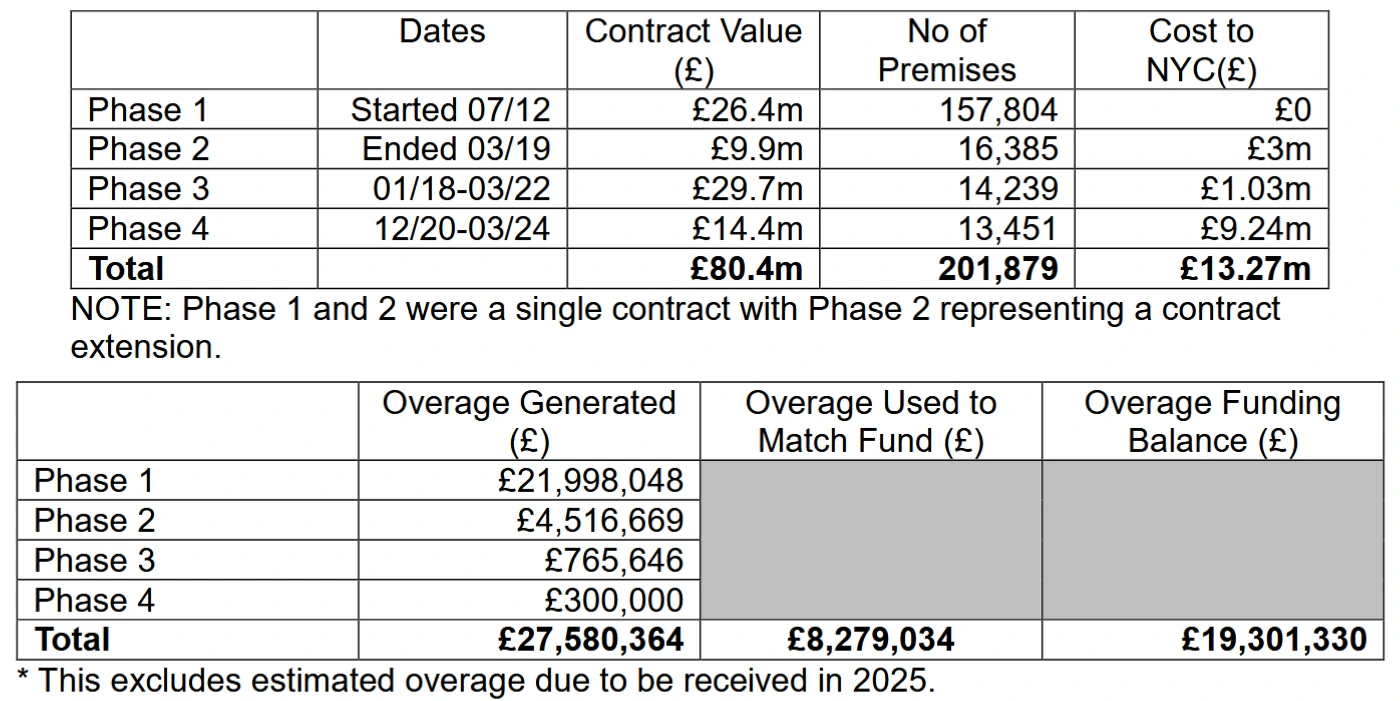
The North Yorkshire Council (NYC) in England has proposed to wind-up the NYNet 100 company, which was originally created to help carry out procurement and contract management for the local authority’s Superfast North Yorkshire (SFNY) project. This has helped 201,000 premises in the rural county to access faster broadband over the last 15 years.

The original state-aid backed SFNY project awarded several contracts across four phases (valued at a total of £80.4m) – using different technologies (FTTC, FTTP, Fixed Wireless etc.) – to help expand the reach of “superfast broadband” (30Mbps+). Openreach and Quickline scooped up most of those. Local coverage of 30Mbps+ broadband now stands at 97%.

NOTE: The SFNY project was managed by NYnet (i.e. the NYC-owned broadband company) and financed by a mixture of funds from the Government’s Building Digital UK (BDUK) agency, EU, North Yorkshire County Council and some private funding from network suppliers.

According to a recent report from the NYC (here), the contracted network operators have also repaid £27.58m in public subsidies to the council after proving strong take-up of the new broadband service post-deployment (aka – clawback/gainshare/overage). Some £8.279m of that has already been reinvested (e.g. extensions to existing contracts), but there is a balance of £19.3m that “remains available“.

This funding belongs to NYC and is not fettered by terms and conditions although a previous commitment was given to BDUK that any balance would be used to promote “infrastructure” with digital infrastructure being a clear objective,” said the update.

Quite what will happen to that £19.3m in the future is unclear, although £1.65m of the overage balance is due to be used to “reimburse NYNet 100 for the costs of delivering Phase 1 of the SFNY programme” (closure of the company requires a clean set of accounts).

Superfast-North-Yorkshire-Funding-and-Clawback-2025

The SFNY programme has now been succeeded by the UK government controlled Project Gigabit scheme, which last year awarded the £73.5m state-aid supported roll-out contract for North Yorkshire (Lot 31) to Quickline (here). The aim of this is to help extend gigabit-capable broadband (1000Mbps+) to 36,300 hard-to-reach premises in the region. The roll-out began earlier this year and has so far covered over 2,000 premises (here).

However, all of this means that SFNY is now at the end of its life, which is why the council has also proposed to approve the winding-up of the wholly owned company NYNet 100 that was created to deliver the broadband programme.

Just to be clear, it’s NYNet 100 and not NYNet itself being wound-up. The County Council had already created NYNet as a company in order to aggregate broadband across the public sector, and there were “clear synergies resulting in the creation of NYNet 100” to help manage SFNY. This will still leave NYNet as a stand-alone wholly owned trading company.

Jersey Competition Regulator Proposes New Telecoms Security Rules | ISPreview UK

Original article ISPreview UK:Read More

The Jersey Competition Regulatory Authority (JCRA) has begun a consultation on introducing new guidance for local telecoms companies on the English Channel Island of Jersey. The aim of this is to help ensure that their broadband, mobile and phone networks are both “inherently secure and reliable“.

Under the newly proposed legal framework, the Authority will receive a considerably enhanced role, designed to monitor and manage compliance with the legal obligations being placed on local telecoms companies – intended to help defend their networks from cyber threats. The proposed changes are closely aligned with similar rules in the UK, such as the recently introduced Telecommunications (Security) Act 2021 (TSA).

NOTE: Jersey is a small island and British Crown dependency in the English Channel, just off the northern coast of France.

The draft new rules (T-062 Telecoms Security) would enable the JCRA to intervene in how local telecommunications companies run their business, manage supply chains, design and even operate networks. Network operators would also face new obligations to report the risk and occurrence of security compromises and there would be compliance monitoring, as well as more information sharing with other public bodies etc. Not to mention an enforcement regime.

Among legal requirements is for telecoms providers to also reduce the risk of anything occurring that compromises the availability, performance or functionality of their networks and services. This means designing and operating communications systems that are “inherently reliable, for the benefit of Islanders and local organisations“.

JCRA CEO, Tim Ringsdore, said:

“This is an important step in helping ensure Jersey has access to the most secure and reliable telecommunications possible. There can be few of us who don’t rely on communications in one way or another, and most people will be aware of the increasingly turbulent and threatening world outside of our Island.

Fortunately, Islanders already have access to high-quality networks and services – the Government’s new legislation is about ensuring local telecoms companies continue their focus on increasing the level of security and reliability. The Authority has worked closely with Government to understand threats and requirements and is looking forward to working with local telecoms companies as they develop their networks and services to meet expectations.”

The Authority’s consultation on its Draft Procedural Guidance and Draft Resilience Guidance opened on 8th August and will run until 17th October 2025.

Netomnia Launch 8Gbps FTTP Biz Broadband to UK ISPs via Wholesale | ISPreview UK

Original article ISPreview UK:Read More

Tewkesbury-based network operator Netomnia (Brsk, Youfibre), which has so far rolled out their full fibre broadband (FTTP) lines to cover 2.56 million UK premises (341,000 customers), has today significantly expanded the wholesale availability of their infrastructure by making it available via new internet providers (ISPs). Starting with business (B2B) packages.

Until now Netomnia (Substantial Group), which recently became the first alternative network to start adopting 50Gbps (50G -PON) broadband technology (here), has primarily only sold packages to businesses and homes via ISPs that are a part of the same group – Youfibre and Brsk. For example, customers of Youfibre pay from £23.99 per month for symmetric speeds of 150Mbps and that goes up to £99.99 if you want 8Gbps (7,000Mbps average).

NOTE: The Substantial Group is backed by c.£1.5bn of equity and debt from investors Advencap, DigitalBridge, and Soho Square Capital etc. The operator aims to cover 3 million UK premises by the end of 2025 and then 5m by the end of 2027 (inc. 1m customers by 2028). The service is currently available across parts of over 90 cities and towns.

However, much as we hinted at the end of last month (here), the company has been working to expand the availability of their wholesale platform and thus increasing the number of retail ISPs able to offer packages over their network. The big news today is that they’ve announced the launch of their B2B Wholesale Platform for other ISPs to harness – available to over 100,000 business locations and growing.

The catch is that those partners can initially only offer business broadband packages via Netomnia’s network, although there’s no reason why regular consumers can’t simply purchase the same service (except for the fact that business products tend to cost more).

Key Wholesale Network Highlights

• Ethernet over FTTP: Delivered over XGS-PON with symmetrical speeds and 5-hour SLAs — an ideal alternative to traditional Ethernet, with superior economics and consistent performance.

• Business and Consumer FTTP: Up to 8 Gbps across the UK’s second-largest Alt-Net footprint — built for both volume and quality.

• Ethernet Point-to-Point: Dedicated, uncontended fibre with bandwidths from 1 Gbps to 10 Gbps — ideal for enterprise-grade connectivity.

• Dark Fibre: Passive infrastructure offering partners full control to build and manage their network.

The initial launch is being supported by a “focused group of trusted partners“, which reflects the onboarding of over ten ISPs to their network. Netomnia said this would allow them to “fine-tune onboarding and tooling before wider market availability“.

Jeremy Chelot, Group CEO, said:

“We didn’t set out to be just another wholesale provider. We’ve engineered a platform that outperforms — built for scale, flexibility, and a seamless partner experience. We’re giving providers faster, simpler access to high-quality infrastructure, without the usual barriers.”

The operator’s rapidly growing network coverage and blistering speeds will naturally be very attractive to a lot of internet providers. Except some retail ISPs may still be wary of the fact that Netomnia is not a pure wholesale-only network and continues to operate their own vertically integrated retail ISPs (i.e. effectively competing with its own partners).

As for home users, Netomnia hasn’t revealed precisely when their wholesale offerings will be expanded to cater for the consumer market, but apparently it will occur “later this year“. ISPreview understands that residential products are likely to launch via larger ISPs first, so there’s an element of prioritisation involved with how their wholesale expansion is being handled.

Some of our eagle-eyed readers will have noticed that broadband ISP Aquiss did briefly announce (before retracting) that they had gone live on this service last week. The partners list below doesn’t mention them directly, but they’re covered by one of those listed (some of the partners are associated to more than one other ISP).

Netomnia’s B2B Partners

• Baltic Broadband

• Exa Networks

• FibreNova

• Flexgrid

Giant

• Go Momentum

• ID Net

IP River

• TalkStraight

• Triangle Networks

• Velox Serv

Streetwave tests mobile coverage with sensors on Yorkshire bin lorries | Total Telecom

Original article Total Telecom:Read More

News

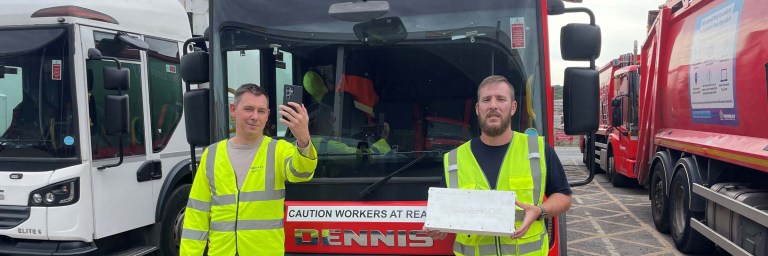
Bin lorries and street sweepers in South Yorkshire are being fitted with sensors to map mobile phone signal across the county, part of a year‑long project funded by the South Yorkshire Mayoral Combined Authority (SYMCA)

Mobile analytics company Streetwave has been awarded £34,000 for the project and has already begun collecting data in Barnsley, with results for Doncaster, Sheffield and Rotherham due to be published before the end of the year.

The project will produce a free, public online map and postcode checker designed to show which of the UK’s mobile operators — EE (BT), Virgin Media O2, and the newly combined VodafoneThree — provides the best coverage. SYMCA says the information will help residents make an informed choice about which network to buy connectivity from.

Streetwave will use vehicle‑mounted sensors that gathers real‑world measurements of signal strength, download and upload speeds, and reliability as the sanitation vehicles travel across the local area. The company says these measurements are timestamped and independently verifiable, and that the system is intended to provide a practical alternative to operator‑modelled coverage maps by producing continuously refreshed, empirical data.

Streetwave has conducted similar projects in other parts of the UK, including in Norfolk at the end of last year and in Liverpool earlier this year.

The vehicle mapping initiatives sit alongside national tools, such as Ofcom’s own coverage checker, which combines operator‑provided models with regulator testing to display indoor and outdoor coverage. Streetwave say its testing methods are complementary, offering a house‑by‑house, measurement‑based comparison and exportable reports that local authorities, housing providers and planners can embed on public portals.

SYMCA says the data from Streetwave’s testing will become public by the end of the year.

Also in the news:
US judge rules Huawei must face charges of fraud and racketeering
Optus ditches football rights to focus on telecoms
Nokia launches digital twin platform Enscryb to digitalise energy sector

Broadband ISP Brillband Goes Live on AllPoints Fibre’s UK Aquila Platform | ISPreview UK

Original article ISPreview UK:Read More

Glasgow-based full fibre broadband ISP Brillband, which was acquired by AllPoints Fibre Networks (APFN) back in October 2024 (here), has today announced that they’ve successfully placed their first orders via APFN’s new aquila wholesale platform – this aggregates fibre (FTTP) networks from several operators to help retail providers expand their coverage.

At present APFN’s platform claims to integrates full fibre networks and services from Openreach, BTWholesale, CityFibre and APFN’s own-built consolidated networks (i.e. Jurassic Fibre, Swish Fibre and Giganet). This is said to offer an “expanding footprint currently addressing around 19 million premises, enabling retail providers like Brillband to rapidly expand their addressable market permitting them to scale to serve customers nationwide.”

Brillband said it would continue to operate as an independent retail ISP brand within the APFN Group, maintaining its current approach to customer service and digital-first operations.

Duncan Di Biase, Founder and CEO of Brillband, said:

“This is a landmark moment for Brillband. Our first order on aquila is more than just a technical achievement. It is a signal that our vision for better broadband is becoming reality. We have always believed in doing things differently, and aquila gives us the reach, flexibility and insights to deliver reliable and honest broadband to customers’ homes across the length and breadth of the UK without in-contract price hikes.

Ronan Kelly, Managing Director of APFN, said:

“We are thrilled that Brillband is now using aquila. Their energy and commitment to transforming the broadband experience aligns perfectly with our mission. This first API driven order is just the beginning. We look forward to supporting Brillband as they grow and innovate across our expanding network footprint.”

However, given that those trying to sign-up via Cuckoo (another one of the APFN Group’s own retail ISPs) are still having difficulty accessing packages via APFN’s own consolidated networks (Jurassic Fibre, Swish Fibre and Giganet), there was a question mark over whether the same issue might befall new customers trying to join Brillband in those same areas.

ISPreview did conduct some limited testing on Friday and found that we still couldn’t access APFN’s own built networks via either Cuckoo or Brillband. We also contacted APFN to clarify the status of their related integration and a spokesperson told us that it won’t be live at launch, although they are “working to change that as quickly as we can“. In the meantime, access is still possible via Openreach and CityFibre’s networks.

BBC Looks Set to Build its Own “radically simplified” Freely TV Streaming Box | ISPreview UK

Original article ISPreview UK:Read More

The BBC’s Controller of Digital Transition, Helen Burrows, has confirmed that the corporation is “exploring the idea” of building its own UK set-top-box device to support the new broadband-based live TV streaming service, Freely, which until recently lacked any support among existing steaming boxes and sticks.

Freely, which first launched in April 2024 (here), is not currently being pushed as a replacement for the ageing terrestrial Freeview (inc. Freeview Play) and satellite-based Freesat TV platforms and should, at least for now, be seen as more of a complement – a different kind of service that helps to make broadcast TV more accessible. The change is important because the age of traditional terrestrial TV signals, which came via the airwaves, is expected to gradually come to an end as gigabit broadband nears almost universal UK coverage by 2032 (currently c.88%).

NOTE: Freely is being developed by Everyone TV (formerly Digital UK), which runs free TV in the UK and is jointly owned by the BBC, ITV, Channel 4 and Channel 5.

However, much as we’ve said before, one of the biggest roadblocks to adoption of Freely’s platform today remains its limited availability, which has seen the new service deployed across a variety of new TV sets but not much else (some major TV manufacturers are also still missing from their supported device list). But customers of most existing internet-connected TVs, as well as popular TV streaming boxes and sticks, have all been excluded.

The good news is that the above situation did recently start to change after French company Netgem revealed (here) that they were due to release a new IPTV box, both at retail and for their existing ISP partners, during Q4 2025 (such boxes are typically bundled by broadband ISPs like Brsk, TalkTalk, CommunityFibre, Wightfibre and others). A new box is needed because it apparently required a “significant software upgrade that needs the very latest chipsets to run,” which would seem to be debatable, but we don’t know the specifics.

The latest development on this front came after the BBC published a new policy document (Socioeconomic Impact of Digital Transition), which among other things seemed to get more specific about the BBC developing a “new streaming media device” for Freely and would be “designed with accessibility in mind and a radically simple user interface specifically designed to help those currently underserved by digital services.”

Helen Burrows, BBC Controller of Digital Transition, said:

“The BBC believes that TV has a role to play in any transition to a fully digital society. A managed switchover to IPTV, with an intervention to help digitally excluded groups get connected and build digital skills, could be a catalyst to help realise these wider social and economic benefits.

The transition to digital in the TV sector is already happening:

  • Today, 85% (23m) of the UK’s TV homes are connected, meaning some or all of their viewing is online. This is forecast to rise to 97% in 2034 (3Reasons, Spring 2025) absent any market interventions.
  • Almost a quarter of UK homes (7m) now watch TV exclusively via the internet and a tipping point is projected to be reached in 2029 when over 50% of homes will watch TV this way (3Reasons, Spring 2025).
  • Audiences who watch TV via the internet are receiving a better service that offers more choice, convenience, higher quality video and improved accessibility features for those who need them.
  • Given these viewer shifts and market dynamics, the BBC is advocating for a transition to an all-IPTV future in the 2030s.

To help ensure that all audiences can benefit from the transition and that the principle of universality is maintained, the BBC is exploring ways it can support audiences to access IPTV, building on the support we gave to create the easy-to-use free streaming TV platform Freely. For example, the BBC is exploring the idea of a new streaming media device, designed with accessibility in mind and a radically simple user interface specifically designed to help those currently underserved by digital services.”

The idea was actually first hinted at in May 2025 when the Director General of the BBC, Tim Davie, appeared to indicate that Freely was “considering” the development of a streaming media device (here). We and many others had assumed that the BBC, which doesn’t normally build consumer kit itself, was speaking in its capacity as a primary custodian of Freely and this seemed to be supported by Netgem’s recent announcement. But we were wrong.

Cord Busters has been able to confirm that the BBC’s proposed development is a “separate thing” from Netgem’s announcement (two different projects), although it’s important to highlight that they do use the phrase “exploring the idea” above (i.e. it’s still very tentative). Developing their own Freely kit would be a major and costly step for the BBC to take and one that could place them into an awkward position in terms of market competition, depending upon the details.

On the other hand, it’s already been established that the transition from Freeview to IPTV can be more of a challenge for older and vulnerable users to adapt to, which is a market that may not be well catered for by the commercial sector (modern ‘User Interfaces’ can be tedious even for regular users to navigate). In that sense, developing a Freely box that behaves more like a traditional TV for vulnerable users does make sense.

However, at the end of the day, Freely’s adoption – even with a new box from the BBC – is likely to remain limited until the service arrives on popular streaming devices from Amazon, Google and Roku etc. But so far there doesn’t appear to be much indication of when or even if that will actually happen, and doing so looks as if it might require some device changes (new kit may be needed).

NOTE: Just to be clear. Freeview provides access to live TV over a DTT connection (Freesat uses satellite to achieve something similar), while Freeview Play is a separate app that can be used to access content on-demand.

O2 UK Issue Progress Update on Removal of Inbound 2G and 3G Roaming | ISPreview UK

Original article ISPreview UK:Read More

Mobile network operator O2 (Virgin Media) has issued a progress update on their preparations for the imminent withdrawal of 2G and 3G inbound roaming services for business customers, which is due to occur in just two months’ time on 1st October 2025.

Just to recap. O2 and other mobile operators are currently in the process of switching off their legacy 2G and 3G mobile (mobile broadband) networks (here and here). O2’s move to withdraw 3G is due to reach completion by 31st December 2025, although it will take several years longer to completely retire 2G as it remains necessary for various devices (e.g. Energy Smart Meters / IoT) and as a fallback in areas of poor 4G / 5G signal. But O2 still expects to be in a position to “restrict” 2G services to existing IoT traffic and emergency calling (outside of 4G coverage only) by 1st October 2026.

NOTE: The UK government and all major mobile operators are jointly aiming to phase-out existing 2G and 3G signals by 2033 (here). O2’s current 4G network covers 99% of the UK’s population, while 5G reaches 75%.

The change will free up radio spectrum so that it can be used to further improve the network coverage and mobile broadband speeds of more modern 4G and 5G networks, as well as future 6G services. The switch-off will also reduce the operators’ costs and power consumption.

Last year O2 revealed that, as part of these changes, they would also be withdrawing inbound roaming services from their existing 2G and 3G networks on 1st October 2025 (here). The service is important because it allows users from other mobile operators to access O2’s local network and services, which is particularly tedious given how O2 were still seeing “significant inbound roaming traffic” as of early April 2025 (here).

Suffice to say that O2’s latest progress update notes how “the clock is ticking for organisations still relying on legacy connectivity to migrate“. While many have already begun their transition to 4G and 5G, there may be businesses that require more detailed planning and urgent action.

O2’s Progress Update on Inbound Roaming Withdrawal

We’ve been working closely with the Telecare Services Association (TSA), Ofcom, and the Department for Science, Innovation and Technology (DSIT) to ensure that the telecare industry is ready for the change. Over the past few months, we’ve taken a proactive approach, working directly with TSA to help their member organisations plan and prepare for 2G and 3G inbound roaming withdrawal, including:

Regular sessions with regulators, government bodies, and TSA to provide context around the withdrawal and identify specific risks and mitigations.

Participation in TSA-hosted industry events helping to brief the wider telecare community on the implications of the switch-off.

Supporting telecare providers in identifying high-risk devices, enabling the industry to better understand the scale and nature of the challenge.

Getting your organisation ready

Through working closely with the telecare industry, we’ve discovered key challenges to migration and are sharing the insights on how to tackle them, in the hopes that other industries can use these findings to support their plans. Here are the ways your organisation can prepare:

Understand which devices are at risk and the locations. Conduct a thorough assessment of all your connected devices to ensure that you’re aware of the locations that require your attention. This may need you to work with your service provider to collect information from devices on the different networks they can attach to or run tests to identify devices that can only attach to the Virgin Media O2 2G network.

Budget appropriately for any replacements. Make sure you’re anticipating your organisation’s needs and be aware that the activity of replacing devices themselves can be a significant part of the costs of upgrading a device.

Manage your team’s time to prioritise replacement visits. Ensure your engineers have the time and prep to carry out site visits for replacing devices.

Consider if your devices can roam on another 2G network. This should be considered and checked during the process of identifying at risk devices.

All organisations that have devices operating on legacy 2G and 3G roaming networks should ensure they can answer these questions. Act now, assess your device estate, and ensure you’re future-ready.

While we’ve made significant progress, we’re still seeing inbound roaming traffic on our 2G and 3G networks. If your organisation hasn’t yet confirmed that all connected devices are 4G or 5G compatible, now is the time.

Roaming onto O2’s network can only be provided by other network operators. This means that in most cases we cannot identify or contact organisations that still rely on these services. Only the other network operators who provide the roaming services can directly identify or contact the organisations still relying on these services. That’s why we’re urging everyone, whether they’re a Virgin Media O2 customer or not, to speak to their provider and check their connectivity solutions today.

O2 has also published a fairly basic connectivity guide (VMO2-ROAMING.pdf) about all this, which is really just a bunch of links to additional information pages. The big risk is that, come the deadline, we could see a rise in people complaining about localised problems with securing basic mobile / voice coverage.

Vodafone and Three UK Update on Progress of Joint Network Sharing | ISPreview UK

Original article ISPreview UK:Read More

Mobile operator VodafoneThree (Vodafone and Three UK) has provided a progress update on their work to implement a new Multi-Operator Core Network (MOCN), which is one of the first big benefits of the recent merger (here and here) – allowing 27 million customers to roam across both networks at no extra cost (whichever one provides the best signal in your location).

Back in June 2025 we noted that the first 24 mast sites had already gone live with this roaming feature (here), but we also highlighted how it would take a total of 8 years to fully complete the roll-out (it will be 95% complete after 6 years). The deployment is thus initially being strategically focused on areas of the country that will gain the most benefit from it (i.e. those with a poor 4G or 5G signal from one or the other operator).

NOTE: Customers of Vodafone UK, Three UK, VOXI, Talkmobile and Smarty can all take advantage of access to roam. All five are brands of VodafoneThree. But we assume it may be subject to negotiation for other MVNOs that use the same networks.

The latest progress update reveals that the feature has now gone live via a total of 600 mast sites, with 9,000 to follow by the end of the first year of VodafoneThree being formed (March 2026 still seems to be the target for this). Meanwhile, some 7 million Three UK customers are already said to be experiencing an average 20% boost in 4G (mobile broadband) speeds, rising to 40% in some key towns and cities, thanks to the integration of combined spectrum. But substantiating the latter claim remains incredibly difficult.

Progress Update

Together, these network improvements reflect the rapid pace at which VodafoneThree is transforming connectivity across the UK. All customers of VodafoneThree brands will see benefits within 12-months.

➤ Peak period improvements – Busy times, such as rush hour, put a strain on the network, as sites can be flooded with more customers than they can provide a good quality service to. Thanks to the technology, customers will be moved from a busy site to one that is able to provide the required level of performance. It also simultaneously relieves the strain on the busy site, providing a better experience for all customers.

➤ Eliminating 4G not spots – By providing 4G coverage to 16,500km of the UK where it wasn’t previously available to either brand’s customers, VodafoneThree will eliminate not spots across an area ten times the size of London.

➤ Enhanced 5G coverage – Around 71% of the UK population (circa 50 million) will have access to VodafoneThree’s fastest 5G speeds by the end of year one, thanks to bringing the networks together and an accelerated 5G roll out plan.

We should remind readers that users of the latest 5G Standalone (5G SA) services (i.e. a pure end-to-end 5G only network) will have to wait a bit longer as these are not yet able to support the new roaming ability, and it’s unclear when that will change. Over the longer term, VodafoneThree will ultimately need to move beyond MOCN and deliver a single core network, but that’s another thing that’s still “many years away“.

Andrea Donà, Chief Network Officer, VodafoneThree, said:

“Bringing our networks together marks a major milestone for VodafoneThree, unlocking greater capacity, reducing 4G not spots, and expanding 5G coverage. Just weeks into the rollout, millions of customers are already seeing the benefits of a nationwide boost, powered by our spectrum integration and Multi-Operator Core Network technology. It’s a clear signal of VodafoneThree’s ambition and ability to move at pace to deliver a new era of connectivity.”

At this point it’s worth remembering that the merged company ultimately aims to reach 99.95% UK population coverage of their 5G Standalone (5G SA) network by 2034, while also pushing fixed wireless access (mobile home broadband) to 82% of households by 2030.

Openreach UK Restarts FTTP Broadband Build in Fuel Leak Hit Bramley | ISPreview UK

Original article ISPreview UK:Read More

Network operator Openreach has today revealed that their engineers, alongside those of other alternative networks, are now resuming efforts to both maintain their existing network in the village of Bramley (Surrey) and to deploy new full fibre broadband (FTTP) infrastructure. Much of this was stopped a few years ago after the seriousness of a local petrol leak became clear.

Just to recap. Openreach and others have spent the past few years dealing with the “significant and ongoing impact” of the incident (here), which technically began 6 year ago after fuel started leaking from a local ASDA Petrol Station (the leak started under a different owner). But the full impact of this wasn’t fully appreciated until later. Over the course of that time the leak has begun to cause fuel smells in the area, harming local businesses, and has also spread into the groundwater (i.e. disrupting the drinking of tap water in certain areas) and even local utility services.

NOTE: Openreach previously measured the petrol in their network to be above the “Lower Explosive Limit” (i.e. an ignition source could lead to an explosion within underground ducts).

Suffice to say that a huge cross-sector operation was launched a few years ago to clear up the dangerous pollution and, much as we first reported in June 2025 (here), this has made significant progress over the past 18 months. The progress means that Openreach has now implemented softer local restrictions, which allows engineers to re-start running new fibre via existing cable ducts and conduct other work.

The network operator’s own FTTP build is thus “expected to begin in the coming weeks” (it was first announced in 2021 but got disrupted by the fuel leak), although local engineers will still be expected to follow special safety measures (e.g. wearing protective gear, carrying gas detectors and monitoring oxygen levels where nitrogen has been deployed etc.).

Andy Whale, Openreach’s Chief Engineer, said:

“This has been a really frustrating situation for residents and businesses in Bramley, but we now see some light at the end of the tunnel. We want to turn a bad situation good by not just repairing and restoring the damaged network that exists today, but by building something much faster, more reliable and longer lasting.

This Full Fibre upgrade is a long-term investment in Bramley’s future, supporting local people and businesses to move on from the disruption with a network they can rely on for decades. We hope it’ll help the local community and economy to recover, grow and thrive in a digitally connected future.”

Rt Hon Sir Jeremy Hunt, MP for Godalming and Ash, said:

“I’m delighted to support Openreach’s investment in Bramley. These upgrades recognise Openreach’s support for the wider Bramley community which is recovering from a very tough couple of years with the fuel leak.

Openreach’s ongoing commitment to Bramley is commendable and I would like to offer my personal thanks for the service the team have provided to address and resolve significant consequences of the fuel leak – a situation not of their making. Openreach enabling access to reliable and high-speed internet will bring substantial benefits to both residents and local businesses – this really is brilliant news for Bramley!

The new roll-out expects to cover 2,500 premises in the community, which is home to a population of around 3,600. But it should be said that the area isn’t yet completely safe (the clear-up is ongoing) and so engineers will have to work with some caution, which may make the effort go a bit slower than usual (no completion date was given for the roll-out).

Once again, it’s very important to stress just how serious and dangerous this situation has been and continues to be, both for local residents and the engineers who are trying extremely hard to resolve an incredibly challenging problem. Openreach has until now been maintaining connectivity in the area through a combination of remote fault fixes, temporary satellite hubs at key community locations, and alternative network solutions.

The operator has warned that it reserves the right to reintroduce stricter measures if the current situation changes.

Vorboss Criticises Ofcom Plan to Water Down Definition of UK Leased Lines | ISPreview UK

Original article ISPreview UK:Read More

London-focused ISP Vorboss, which runs a 100Gbps speed fibre optic network in the UK’s capital city, has told Ofcom that reclassifying the UK’s market for high capacity leased lines to include “LeasedLine Equivalents” (LLEs), such as XGS-PON technology (underpins many FTTP broadband networks), would be “misguided, confusing, and ultimately detrimental“.

The industry regulator is currently in the process of conducting a major Telecoms Access Review 2026 (TAR), which reflects a wide-ranging market study that is typically only conducted every 5-years. The study is looking to make changes that “promote competition and investment” in gigabit broadband and business connectivity. But such things are always easier said than done, with vested interests frequently clashing.

NOTE: Vorboss is backed by c.£250m of investment from Fern Trading, advised by Octopus Investments, which also separately backs the AllPointsFibre Network (APFN). The operator states that they’ve already deployed a 700km long dedicated point-to-point fibre optic network across Central London.

Speaking of which, leased lines have historically been considered as private dedicated fixed lines, which offer guaranteed bandwidth and greater reliability via strong Service Level Agreements (SLA) to specific sites (point-to-point). But in recent years the increased roll-out of Fibre-to-the-Premises (FTTP) based broadband, which has narrowed the technology and performance gap, has started to muddy that debate (e.g. EoFTTP – Ethernet over FTTP).

On this front, one of the lesser-known parts of Ofcom’s proposals under the new TAR concerns its plan to broaden how they define the single product market for leased line access (LLA) services at all bandwidths (data speeds). Under the change, this would now include “leased line equivalent [LLE] services delivered over symmetric PON (e.g. XGS-PON)“, which is the same technology that underpins many consumer FTTP (full fibre) lines.

Extract from Ofcom’s TAR 2026 Consultation

We therefore provisionally conclude that services with features such as uncontended capacity, symmetric download and upload speeds, and quality of service parameters similar to point-to-point leased line services (e.g. fast repair times compared to WLA services) delivered over symmetric PON (such as XGS-PON) should be included within the LLA product market. We refer to these services as ‘leased line equivalent’ (LL-equivalent) services.

As with anything the regulator suggests these days, this idea isn’t universally popular, and business ISP Vorboss told ISPreview that they’ve expressed “serious concerns” over the redefinition. “While we appreciate Ofcom’s broader objectives of ensuring fair competition and encouraging investment, we strongly believe that this reclassification is misguided, confusing, and ultimately detrimental to both end customers and the business connectivity market,” said the provider’s regulatory submission.

Vorboss highlights several “fundamental and material differences” between point-to-point leased lines and Ethernet over symmetric PONs.

Vorboss – Examples of the Differences

These technologies are not substitutes from a technical, operational, or investment perspective. Including both in the same product market undermines these distinctions:

• Network Topology and Investment: Point-to-point leased lines are far more resource-intensive, requiring up to 100x more fibre per customer. The network architecture and build economics are entirely distinct from PON-based strategies, which share infrastructure across multiple users. Providers typically pursue one strategy or the other, not both.

• Bandwidth Capabilities: Leased lines can already support symmetrical services at 10Gbps, 100Gbps and beyond. In contrast, XGS-PON is fundamentally limited in both capacity and scalability. Current PON solutions do not support higher bandwidths, nor is there evidence of widespread provider plans to upgrade to future versions with such capabilities. This directly contradicts the increasing bandwidth demands of modern businesses.

• Contention and Performance: Unlike leased lines, PONs inherently introduce contention, which limits performance and reliability. Businesses requiring uncontended, high-performance connections cannot rely on PON-based services, which often fail to deliver even the advertised headline bandwidths in practice.

• Scalability and Upgrade Paths: Leased lines offer granular, customer-specific upgrades with minimal disruption. In PONs, any significant bandwidth upgrade necessitates area-wide infrastructure changes, reducing flexibility and responsiveness.

• Resilience and Redundancy: Business customers increasingly demand route diversity and power resilience. These requirements are practically impossible to meet using ethernet over symmetric PONs due to fixed routing and cabinet-based active equipment susceptible to environmental and physical risks.

• Customisation and Control: Leased lines allow bespoke route planning and deployment, enabling customers to tailor connectivity for operational or compliance needs. PON networks cannot accommodate such flexibility.

• Security Considerations: Leased lines provide a physically and logically isolated connection, offering higher levels of security. Ethernet over PON, by its nature, is shared and thus inherently less secure.

• Service Agreements and Reliability: Leased line SLAs reflect the premium nature of the service: guaranteed uptime, rapid repair times, and consistent performance. These are critical to business operations and are not truly replicable by PON services, even if nominal service terms are offered.

The key point above being that, by suggesting “equivalence” between these solutions, Vorboss says Ofcom “risks signalling to the market that the return on investment in genuine leased line infrastructure will be eroded or devalued“. In fairness, there has always been some inevitable impact on leased lines as the capabilities of consumer grade broadband have improved, which occurred with FTTC and now FTTP – particularly for smaller firms.

In addition some operators, like Netomnia, have already partly deployed 50G PON technology (50Gbps), with Cityfibre also considering 100G PON for the future – further narrowing the gap. The example given above for “bandwidth capabilities” is thus set to become increasingly debatable.

The fact that FTTP is such a significant enhancement on what has come before, which narrows the gap to leased lines, is ultimately at the root of why Ofcom feels a need to reclassify LLEs to include XGS-PON lines. But it’s also easy to see why this might upset and threaten operators like Vorboss, which are focused on selling a very modern high performance taken on point-to-point leased lines.

Vorboss are clearly concerned about a rise in providers promoting FTTP based “Ethernet” products, which they say could “artificially inflating the perceived level of competition” and dilute the meaning of Ethernet – opening the door to “misleading marketing from providers that may imply parity where none exists“.

The provider concludes its submission by urging Ofcom to reconsider its approach and “maintain a clear and distinct definition of leased line services” that excludes Ethernet over symmetric PONs. The regulator currently intends to publish their final decision in March 2026, although they’ll publish their semi-final proposals before that in order to allow time for consultation (probably before the end of this year).