Franchise fracas: Vodafone could fall foul of Covid corruption commissioner

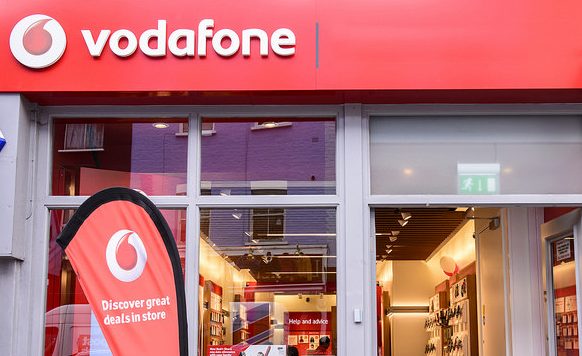
Vodafone shop front

News

Conservative MP John Hayes has asked Business Secretary Jonathan Reynolds to refer the enquiry to the newly appointed Covid corruption commissioner

Back in December, a group of franchisee’s running Vodafone’s high street shops in the UK filed a court case against the operator, claiming the company had “unjustly enriched” itself at their expense.

The case itself primarily revolves around cuts to commission Vodafone introduced in 2020, during the height of the coronavirus crisis. At this time, with the high streets largely deserted, many of the franchisees applied for support in the form of governmental financial assistance to keep their businesses afloat. The claimants allege that Vodafone used its knowledge of this financial support to subsequently slash commission rates paid to franchisees – in effect, absorbing the benefits of the government relief funding.

The claimants also say they were also forced by Vodafone to pay large fines for minor administrative errors.

Many franchisees say these actions pushed their businesses into the red, often forcing them to take out further loans to stay afloat.

In total, 61 of Vodafone’s roughly 150 franchise operators are part of the lawsuit, which is seeking over £120 million in compensation.

In a letter this week, Conservative MP John Hayes has asked Business Secretary Jonathan Reynolds to refer Vodafone and the case to Tom Hayhoe, the newly appointed Covid corruption commissioner.

In this novel position, Hayhoe has the power to investigate misuses of public funds during the pandemic. This will primarily focus on the fraudulent procurement of PPE (Personal Protective Equipment), but also includes scope for investigating cases related to business grants and other government support schemes.

Vodafone says that it “strongly refutes” claims that the company “unjustly enriched” by exploiting government funding.

In a statement to The Guardian, the operator said that its internal investigations into the matter had “concluded that some actions between Vodafone and franchise partners had not always adhered to the standards we expect, however no evidence of misconduct was found”.

The Business Secretary has yet to deliver an official response.

Keep up to date with all the latest telecoms news from around the world with the Total Telecom newsletter

Also in the news:
VEON and Starlink to launch Direct-to-Cell Satellite connectivity in Ukraine
Swisscom completes acquisition of Vodafone Italia
Equinix to buy BT’s Irish data centre business for €59m

Openreach secures £289m in Project Gigabit contracts 

a field with a fence and a mountain in the background

News 

The funding aims to close the digital divide, giving rural residents the same opportunities as urban areas 

The UK government has announced the latest tranche of Project Gigabit funding, with £289 million in contracts being won by Openreach to bring high-speed broadband to some of Britain’s most isolated areas under the ongoing Project Gigabit. 

The four contracts targets areas including the Dee Valley, the Isle of Anglesey, Shropshire Hills, and regions in North and Southwest Wales, Herefordshire, Devon, Somerset, Essex, Northeast England, and Worcestershire. 

The contract will see Openreach deploy fibre-to-the-home networks across included areas, offering faster speeds and greater reliability for residents.  

In total, around 131,000 hard-to-reach homes and businesses are expected to benefit from improved connectivity.  

“We are determined to deliver the infrastructure this country needs to thrive, and I am thrilled to see so many homes and businesses in all areas of the country getting access to the fastest broadband speeds on the market through Project Gigabit,” said Technology Secretary Peter Kyle in a press release. 

“With today’s £289 million investment, we are not only boosting connectivity, but making it easier to access remote healthcare, online education, shopping online. As part of this government’s Plan for Change, we will plug digital divides, helping to make the UK a more equal society where everyone is given a fair shot in life.” 

For Openreach, these latest contracts add to the £800 million won by the company back in August, which pledged to pass 96,600 rural homes and businesses. “Our Full Fibre network already reaches over half the UK, and we aim for 30 million premises by 2030. This investment ensures rural areas won’t be left behind,” said Openreach CEO Clive Selley. 

Currently, over 85% of the UK can access gigabit-capable broadband, a figure the government aims to raise to full national coverage by 2030. Since Project Gigabit’s establishment in 2018, over £2.2 billion has been committed through dozens of contracts involving a mix of large and independent broadband providers. 

Join us at this year’s Connected North, 23-24 April in Manchester. Get discounted tickets here! 

Also in the news:
Microsoft earmarks $80bn for AI data centres in 2025
Digital Edge bags $1.6bn in data centre expansion funding
Amazon readies entry to UK satellite broadband market with Project Kuiper  

Italy to sign €1.5bn government contract with SpaceX, report suggests 

a model of a rocket with a smaller rocket next to it

News  

Italy is in advanced negotiations with SpaceX for a €1.5 billion ($1.55 billion) contract to enhance the country’s telecoms security, according to media reports 

The proposed five-year deal will focus on implementing encrypted government communications, enhancing military operations in the Mediterranean, and providing satellite services for emergency responses to natural disasters or security threats. 

As part of the deal, SpaceX’s Starlink system will be deployed to boost connectivity across the country, with a particular focus on underserved regions where high-speed internet access is limited. 

The agreement includes plans to test Starlink’s satellite services as early as this month.  

The initiative is part of a broader strategy by the Italian government to address the digital divide and improve nationwide access to reliable and fast internet services. 

The partnership with SpaceX is the latest step in the deepening relationship between Italian Prime Minister Giorgia Meloni and tech billionaire Elon Musk, something that may prove invaluable as the latter is set to play a key role in the incoming Trump administration.  

Meloni has also recently returned from a trip to visit Donald Trump in Mar-a-Lago, Florida, over the weekend. 

The Italian government has confirmed that discussions with SpaceX are ongoing but stressed that a deal has not been reached yet

“The talks with SpaceX are part of normal government business,” the government said. 

Last month, Ukrainian telecoms group VEON has announced a new partnership with Starlink, a division of SpaceX, to bring direct-to-cell satellite connectivity to Ukraine.   

The deal will see Kyivstar, VEON’s Ukrainian subsidiary, offer these satellite-based connectivity services to its customers across the country.  

Keep up to date with the latest international telecoms news by subscribing to the Total Telecom newsletter  

Also in the news:
Microsoft earmarks $80bn for AI data centres in 2025
Digital Edge bags $1.6bn in data centre expansion funding
Amazon readies entry to UK satellite broadband market with Project Kuiper  

Four million locations in sight for fiber builder Brightspeed

Press Release

Brightspeed, one of the nation’s largest fiber broadband builders focused on empowering more homes with ultrafast, reliable internet, today announced its multi-gig-speed network has passed approximately 1.82 million locations — surpassing its year-end goal of 1.75 million fiber-enabled premises across its 20-state footprint. The company rolled out more than 17,600 miles of fiber cable in 2024 bringing the total fiber deployed since the build launch to more than 103,000 miles. Brightspeed’s high-speed internet service is available immediately for installations to hundreds of thousands of homes and businesses in more than 160 communities, empowering more customers who lack quality connectivity options with ultrafast, reliable internet.

“When we launched in 2022, we made a multi-billion-dollar investment and a pledge to bring transformative fiber broadband connections to the communities we serve. 2024 proved to be a milestone year for us,” said Brightspeed CEO Tom Maguire. “Our well-planned execution and the landmark reinvestment and support from our financial stakeholders has paid off, generating the momentum to move closer to achieving our upsized goal of passing more than four million locations with our fiber network build across our territories. With our proven operational expertise, we are well-positioned to exceed our goal.”

“I am incredibly proud of our team members in the field who have stepped up to the challenge to reach millions of locations with our fiber network by working with local municipalities and constructing efficiently, all while continuing to serve our current customers,” said Brightspeed Chief Operating Officer Manny Sampedro. “Various storms and hurricanes in 2024 severely impacted many of our customers across our southern communities and our teams worked around the clock to restore their services. Thanks to our industry-leading cloud platforms these challenges didn’t interrupt our end-to-end fiber network construction workflows helping us deliver fully connected homes and businesses to our customers — many more than we expected.”

The company is actively building its Brightspeed Fiber Internet network in 17 states, leveraging the latest XGS-PON (10-Gigabit Symmetric Passive Optical Network) technology to deliver multi-gig-speed symmetrical upload and download capabilities. The technology provides consistent responsiveness that enables multi-device households to connect, work, study, stream, communicate and game efficiently and reliably. Brightspeed Fiber Internet service plans also include a Wi-Fi router, ensuring optimal speed and performance in every room of today’s device-dense homes and offices.

High-speed internet equals opportunity for households and businesses alike, and access to fast, reliable and affordable internet and Wi-Fi will help close the rural-urban digital divide. In addition to Brightspeed’s multi-billion-dollar investment in deploying next-generation fiber-optic technology, the company has been awarded more than $238 million in local, state and federal broadband grants and funding, which includes the company’s first BEAD program award from the state of Louisiana. These local, state and federal investments will expand the company’s planned network build by nearly 121,000 in 14 states. Brightspeed continues to pursue state and federal grants and funds to further augment its planned build in the states that it serves, including BEAD program funding.

Families and businesses across our footprint are seeing more Brightspeed trucks in their local neighborhoods as crews work to bring families and businesses online. Customers can check for fiber availability in their area by visiting www.brightspeed.com/brightspeed-fiber-internet/ and sign up to receive alerts when service is available at their location.

Meet Brightspeed
Brightspeed are Gold sponsors of the Broadband Communities Summit taking place on June 23rd – 25th, 2025 at the George R. Brown Convention Center, Texas. Find out more about how to get involved on the website bbcmag.com/summit

Openreach Reveals Biggest UK Broadband Traffic Events for 2024

Network access provider Openreach (BT) has today revealed that broadband usage across their UK network increased by 10.5% in 2024 (higher than the c.9% recorded for 2023 and 2.5% in 2022) to total 103,590 PetaBytes (PB) of data, with December 2024 being the “busiest month of the year for broadband traffic” (1st Dec 2024 was the busiest day).

The operator typically supplies numerous broadband ISPs (e.g. TalkTalk, BT, Sky Broadband and hundreds more) across the country and as such their platform often sees the impact of major events, such as big software updates, online video game releases or live video streaming and sporting events.

NOTE: 1 PetaByte is equal to 1,000 TeraBytes (TB) or 1,000,000 GigaBytes (GB). For context, Openreach states that an average 4K quality video stream uses about 7.2 GigaBytes per hour, but in the real-world this figure will vary significantly due to lots of different factors (compression level, codec choice, type of video content etc.).

Clive Selley, CEO of Openreach, said: “Fast, reliable connectivity is essential for the UK, and the increased traffic on our broadband network is evidence that customers are increasingly reliant on it in their daily lives.” In order to help underline this point, the operator has included a bullet point summary with some of the key traffic trends they saw during 2024, which we’ve summarised below.

Just remember that demand for data is of course constantly rising and home broadband connections are forever getting faster, thus new peaks of usage are being set all the time by every ISP and network operator.

Key findings for the UK’s broadband use during 2024 include: 

  • The busiest day across the Openreach network was Sunday, December 1st, when 405 PB of data was consumed. This was unusually high due to a surge in online spending as people sought ‘Black Friday’ bargains, and downloaded the latest content update for popular online multi-player game, Fortnite.
  • The 2nd busiest day was Thursday 26th December, which was due to new gaming consoles being used, and 8 Premier league games being streamed on Amazon Prime. More than 367 PB of data was consumed across the Openreach network.
  • The next busiest day was Sunday November 24th, when 355 PB of data was consumed.
  • The busiest months in 2024 were December at a usage of 9,707 PB, an 8.5% rise on December 2023 and November at 8,953 PB – an 8% increase on November 2023.
  • The busiest day of the week is typically a Sunday.
  • The busiest time on the network is usually between 8pm and 10pm
  • The busiest hour during the festive period was between 20:00 and 21:00 on the 26th December.
  • Live football (Amazon Prime) and online gaming continue to have the greatest impact on UK’s broadband consumption.

Separately, Ofcom recently reported that the average monthly fixed broadband data usage is now 531GB (GigaBytes) per connection across “all technologies“, which rises to an average of 766GB when only looking at full-fibre connections. However, due to a change in the regulator’s methodology, we can’t compare this with the previous year’s results.

Demand for specialised cyber services in the UK continues to soar

Press Release

A ten-fold increase in customers in the space of a year has led Red Helix, a market leader in cyber security and network performance, to invest £1million in expanding the capacity of its UK-based 24/7 security operations centre (SOC), increasing headcount by 150%. The company expects its SOC team to grow further in 2025, as demand for its specialised cyber services continues to soar.

Despite the global cyber skills shortage, Red Helix has been successful in recruiting and retaining SOC analysts who understand real-world security in small and medium-sized companies. The investment has been dedicated to creating innovative workspaces to support this talent, building a first-class team, and deploying an integrated suite of tools to ensure Red Helix can continue delivering industry-leading cyber security services tailored to the unique needs of SMEs.

Since its launch, Red Helix’s round-the-clock SOC coverage has brought enterprise-level security to the small and medium-sized businesses that often lack the in-house skills or resources to evaluate, integrate, and manage the security platforms they need.

As Red Helix CEO, Marion Stewart explained, “Our mission is to bridge the gap between the needs of small to medium businesses and the high-degree of complexity in security solutions they need – which are usually only accessible to larger enterprises.”

“By investing in our SOC,” she continued, “we’re able to protect more UK businesses from ever-evolving cyber threats. For many SMEs, one breach could jeopardise the entire company. Moreover, as small suppliers can be targeted to reach larger enterprises, there’s increased pressure on all supply chain members to uphold strong security. Each member of our SOC team understands the critical role our services play in protecting businesses from cyber disruptions. They are dedicated to providing proactive, reliable security, giving companies confidence that they’re in safe hands.”

The SOC, based at Red Helix HQ in Buckinghamshire, combines best-of-breed technologies with human expertise and provides a service that protects companies’ users, devices, networks, data, and applications in cloud, on-premise and hybrid environments. Through the company’s innovative pod structure, its team of analysts gain an in-depth understanding of each client’s systems and behavioural patterns. They then configure tailored triggers to detect anomalies and security breaches, taking swift and appropriate action as required.

“Taylor Howse, Cyber Security Analyst at Red Helix, said, “We equip our skilled SOC team with top-tier tools to deliver exceptional service. In the ever-evolving cyber world, every day brings new challenges, so staying ahead of threats requires constant readiness. Our structured training ensures we’re prepared. Each day, I analyse security logs and investigate anomalies – not just because I love the work, but also because Red Helix plays a vital role in safeguarding our customers’ environments, and being a part of that is hugely rewarding.”

The expansion of the SOC team comes as Red Helix continues its growth trajectory, having recently announced the appointed former British Army officer, Tom Exelby, as its new Head of Cyber Security. The company was also named as one of the top 40 cyber security companies in the UK and Europe 2024 by TechRound.

Microsoft earmarks $80bn for AI data centres in 2025

News

The hyperscaler continues to double down on AI infrastructure while also making overtures to the incoming Trump administration to keep regulation to a minimum

In a blog post titled on Friday titled ‘The Golden Opportunity for American, Microsoft vice chair and president Brad Smith confirmed that the company is “on track to invest approximately $80 billion to build out AI-enabled datacenters” in 2025.

These data centres, Smith says, will be crucial to training new and more sophisticated AI models, as well as deploying AI a cloud-based applications for customers globally.

Exactly how this gargantuan amount of money will be invested was not revealed, though Smith explained that over half of the funds will be spent the US itself, reflecting Microsoft’s “commitment to this country and our confidence in the American economy.”

Microsoft has been aggressively expanding its infrastructure investment in recent years, aiming to meet the surge in demand for cloud and AI services. In the 2024 financial year ending last June, Microsoft recorded $55.7 billion in capital expenditure, the lion’s share of which was used to further expand its data centre empire. This already represented a huge increase on its 2023 expenditure of $31.9 billion.

Smith highlighted the enormous ecosystem of chip suppliers, applications companies, systems integrators, service providers, software developers, and data centre construction firms that together make the technology sector “an economic backbone” for the US economy.

Of course, for these enormous investments to prove profitable in the long term, Microsoft will need the adoption of AI across the country to increase rapidly. As a result, it should come as little surprise that the second major talking point on Smith’s list was the prioritisation of AI-related digital skills. He spoke extensively about rapidly integrating AI education at a curricular level and in the nation’s workforce, something Smith describes as “a necessity for the nation”.

“AI offers not only new tools for people’s work but also new ways to help people learn almost anything. We have the opportunity as a country to equip all Americans with the skills needed to use AI to pursue higher-paying jobs and more successful careers. This should be our national north star,” he added.

Finally, Smith also took the opportunity to lobby the incoming Trump government for a favourable regulatory environment, leaning heavily on the US’s ever-growing tech rivalry with China.

“The most important priority for the U.S. Government won’t be to match Chinese subsidies with American public spending, although there may be some parts of the developing world where development banks and foreign aid may have a role to play. Instead, the most important U.S. public policy priority should be to ensure that the U.S. private sector can continue to advance with the wind at its back. The United States cannot afford to slow its own private sector with heavy-handed regulations,” said Smith.

“The United States is in a strong position to win the essential race with China by advancing international adoption of American AI. American products are more trusted than their Chinese counterparts, and our private sector is unmatched in its ability to invest in infrastructure around the world. With a balanced and common-sense approach to export control policy, the United States can solidify the diplomatic relations that will be critical to global AI adoption.”

Keep up to date with all the latest telecoms news from around the world with the Total Telecom newsletter

Also in the news:
VEON and Starlink to launch Direct-to-Cell Satellite connectivity in Ukraine
Swisscom completes acquisition of Vodafone Italia
Equinix to buy BT’s Irish data centre business for €59m

Altnet UK Broadband Operator Freedom Fibre Signs Armed Forces Covenant

Alternative network provider Freedom Fibre, which are busy rolling out a 10Gbps capable Fibre-to-the-Premises (FTTP) broadband networks across different parts of England (North West and Midlands), has today announced that they’ve become the latest operator to sign the Armed Forces Covenant (AFC).

The AFC broadly reflects a pledge to recognise the contribution of serving personnel, both regular and reservists, veterans and military families – often as part of recruitment (i.e. ensuring they are treated fairly and not disadvantaged in their day-to-day lives). A number of other broadband operators (e.g. BT, Sky Broadband, EE, Plusnet, TalkTalk, CityFibre, Virgin Media, G.Network, Wildanet and many more) are also signatories.

NOTE: Backed by investment from InfraBridge (DigitalBridge) and Equitix. Freedom Fibre’s network already covers 315,000 UK premises across parts of Cheshire, Greater Manchester and Shropshire in England, as well as North Wales. The operator also holds the Gov’s Project Gigabit contracts to cover 15,000 rural premises in Cheshire (here) and 12,000 in North Shropshire (here).

Nathan Vautier, Freedom Fibre’s CEO, said: “Freedom Fibre is proud to have signed the Armed Forces Covenant as we recognise the value and unique skills, qualifications and experience that people who have trained and served in the Armed Forces bring to complex infrastructure projects delivering gigabit fibre to Britain. As part of our commitment, we actively encourage flexibility, mobilisation and understanding within the business and we look forward to building our work force with former members of the Armed Forces, continuing to support initiatives that highlight the opportunities and recognition they deserve from our country.”

Cardiff’s economic gateway gets ultrafast full fibre speed boost

Ogi – Wales’s home-grown full service telco has today completed work on a multimillion-pound programme to connect Cardiff’s city centre economic gateway to its 10 Gigabit-capable high-capacity full fibre network.


After an extensive programme of work to connect business in the city’s Ocean Way industrial zone, the next phase of Ogi’s work focuses on the Central Square enterprise zone and surrounding area, including St Mary Street.


Connecting to the company’s ‘dark network’ traveling along the M4 corridor and across the Prince of Wales bridge, this new connection brings much needed resilience, network diversity and wholesale capacity into a zone that’s already proving an attractive base for major UK financial, legal and creative sector businesses.


Ogi’s investment in Cardiff is part of its ongoing commitment to revitalising urban centres and supporting communities with reliable, high-capacity broadband technology. This latest phase in its city centre rollout, equips the business, retail and residential zone for the digital demands of the 21st century.


This latest city centre milestone forms part of the company’s broader plans across Cardiff, bringing state-of-the-art connectivity to businesses, and visitors alike – including work to upgrade the connectivity at Cardiff’s iconic Market as part of the £6.5m restoration.


The network operator with its suite of Ogi Pro managed services is already unlocking new opportunities for local businesses, enhancing their ability to innovate and grow in an increasingly digital economy – offering unparalleled speed and stability, and supporting people to stay connected, work remotely, and access cutting-edge technology.

Commenting on the work, Chief Executive Officer, Ben Allwright, said: “Our capital city is home to some of the UK’s leading businesses, and many are Wales’s largest home-grown organisations as well as public sector, educational institutions, cultural and historic sites and key new developments.


“These businesses are typically bandwidth hungry and tech savvy – and deserve cutting-edge, enterprise-grade services. As a leading Welsh telco, we’re working hard to support their operations, growth and productivity, enabling next-generation tech such as AI in a bid to help drive the Welsh economy forward – and make Cardiff one of the best-connected cities in the UK.”


The latest upgrade forms part of Ogi’s multimillion pound rollout across south Wales, transforming urban, suburban and rural communities with the next-generation telecoms technology they need for today and the future.


[ends]

131,000 Premises to Benefit from New Project Gigabit Broadband Contracts

The UK Government and Openreach (BT) have today confirmed their latest four UK contract awards – valued at £289m+ – under the Project Gigabit broadband roll-out scheme, which we leaked last week (here). Some 131,000 premises in rural parts of North and Southwest Wales, Shropshire, Herefordshire, Devon, Somerset, Essex, North East England and Worcestershire will benefit.

Just to recap. The development forms part of Openreach’s earlier Single Supplier Framework agreement (here), which saw them being chosen to deliver all of Project Gigabit’s Cross-Regional (Type C) procurements – reflecting “up to£800m in total state aid to help upgrade 312,000 premises in rural areas of England, Scotland and Wales (the previous Type A [local] and Type B [regional] contracts have all gone to smaller providers).

NOTE: Project Gigabit aims to help extend gigabit broadband (1000Mbps+) ISP networks to “nationwide” coverage (c.99% of UK premises) by 2030 (here), focusing mostly on the final 10-20% in hard-to-reach areas. Some 86% of premises can already access such a network, with Ofcom forecasting 97-98% for May 2027 (here).

However, until recently the Government had only awarded the first two Call-Off contracts for this, which covered various parts of Lancashire, North Wiltshire and South Gloucestershire, West and Mid-Surrey, Staffordshire, West Berkshire. Hertfordshire, Devon and Wales. Both of those contracts – worth a combined £288m – aimed to connect c. 96,600 premises in poorly served areas to the operator’s new full fibre (FTTP) network.

Today’s official announcement adds four additional Type C contracts to Openreach’s belt (see below), reflecting a total public investment of more than £289m and an aim to reach a further 131,000 premises. This means that, across all six Type C contracts awarded since August 2024, a total of around £577m in public investment has been allocated to reach a further 228,000 premises. This leaves one Type C contract, for Scotland, yet to be awarded (due April 2025).

Openreach’s Type C Project Gigabit Contract Awards (Jan 2025)

Type C (Call Off 3): East and South Shropshire, North Herefordshire, North Wales, and South West Wales
Est. Premises: 55,900
Final Value: £108.94m

Type C (Call Off 4): Mid Devon, North Somerset, and South Devon
Est.Premises: 41,500
Final Value: £77.05m

Type C (Call Off 5): Essex and North East England
Est.Premises: 27,200
Final Value: £61.31m

Type C (Call Off 7): Worcestershire
Est.Premises: 23,800
Final Value: £41.92m

NOTE: The above contracts were all formally awarded on 18th December 2024, but the official press release has only come out today. We will update the ‘Estimated Premises’ figure with the final details and contract links later this morning, as they usually follow a bit later.

The areas covered by the new Type C contracts typically reflect locations where no or no appropriate market interest had previously been expressed before to the Government’s Building Digital UK (BDUK) agency, or areas that have been descoped or terminated from a prior procurement (i.e. there was a lack of market interest in upgrading them). Such areas are often skipped due to being too expensive (difficult) for smaller suppliers to tackle.

Openreach CEO, Clive Selley, said:

“Our new Full Fibre broadband network now reaches more than half of all properties in the UK, and we’re confident we can reach as many as 30 million premises by the end of the decade, assuming the right regulatory and investment conditions exist. This is a British infrastructure success story which experts say will boost productivity by £73 billion and bring a raft of social and environmental benefits for the country.

We believe that everyone deserves access to fast and reliable broadband, and we’re proud that this partnership will help extend our ultrafast, ultra-reliable network to areas that would otherwise be left behind by the private sector.”

Technology Secretary, Peter Kyle MP, said:

“We are determined to deliver the infrastructure this country needs to thrive, and I am thrilled to see so many homes and businesses in all areas of the country getting access to the fastest broadband speeds on the market through Project Gigabit.

With today’s £289 million investment, we are not only boosting connectivity, but making it easier to access remote healthcare, online education, shopping online. work, learn, shop and stay in touch with loved ones online.

As part of this Government’s Plan for Change, we will plug digital divides, helping to make the UK a more equal society where everyone is given a fair shot in life.”

Take note that Openreach have previously confirmed that “selected” Type C areas would also be the first in the UK to gain access to their forthcoming 1Gbps symmetric speed FTTP package from April 2025 (here). But the exact details of which locations will benefit from this and how much those tiers will cost have yet to be revealed (the initial launch is expected to be quite limited).

The new service, once live, can be ordered via various ISPs, such as BT, Sky Broadband, TalkTalk, Vodafone and more (Openreach FTTP ISP Choices) – it is not currently an automatic upgrade, although some providers have started to do free automatic upgrades as older copper-based services and lines are slowly withdrawn.

As for Project Gigabit itself, it is now in the process of delivering gigabit broadband connectivity to over 1.1 million hard-to-reach premises. Dozens of related Type A, B and C contracts – representing more than £2.2 billion of public investment – have now been signed with over 10 different suppliers to deliver the upgrades, including many smaller, independent broadband providers. But it will take several years to complete these deployments, and they won’t cover 100% of premises in every single location they reach.