Harmeen Mehta Joins Equinix as Chief Digital and Innovation Officer to Accelerate Customer and Employee Experiences | Total Telecom

Original article Total Telecom:Read More
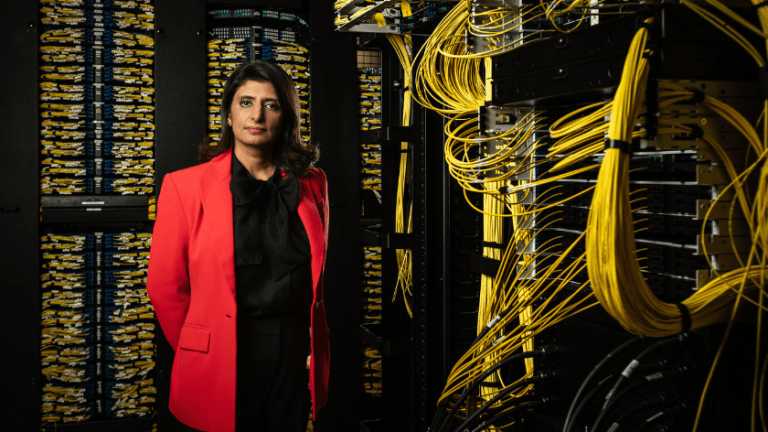
Distinguished Leader in AI-First Business Transformation Joins from BT, Bharti Airtel

Press Release

REDWOOD CITY, Calif., April 3, 2025 — Equinix, Inc. (Nasdaq: EQIX), the world’s digital infrastructure company®, today announced the appointment of Harmeen Mehta as Executive Vice President and Chief Digital and Innovation Officer (CDIO), effective April 4. With 28 years of experience in leading extensive digital transformations within the technology infrastructure sector, Mehta brings substantial expertise to Equinix as the company continues to advance its leadership in digital infrastructure.

“Harmeen is a visionary leader with a proven track record in digital transformation and innovation,” said Adaire Fox-Martin, CEO and President, Equinix. “Her experience in leading complex programs and developing innovative solutions will equip us to better serve our customers and enhance experiences across the organisation. I look forward to her leadership in advancing innovation and value across our ecosystem.

Serving in the new role of CDIO, Mehta will align technology capabilities with business strategy to drive the company’s digital transformation and innovation strategy, leveraging emerging technologies to enhance customer experience, improve operational efficiency and foster innovative business models. She will serve on the Equinix Executive Staff reporting to Equinix CEO and President, Adaire Fox-Martin.

“Equinix is a truly unique company — the hidden layer that enables the innovations that people rely on every day, from video calls and online shopping to the foundational pillars of modern society like food production and drug discovery,” said Mehta. “With an eye on innovation, I look forward to leading Equinix’s transformational journey to deliver even greater opportunities for the thousands of customers that rely upon Equinix every day for their mission-critical digital infrastructure.”

Mehta previously served as Chief Digital and Innovation Officer at BT Group, where she led the digital and AI-driven transformation of the company, significantly enhancing customer experience and operational efficiency. Prior to BT, she was Global Chief Information Officer & CEO, Cloud and Security Business at Bharti Airtel Limited, where she led digital transformation initiatives for one of the largest global telecom companies. She has also held senior technology leadership roles at BBVA, Bank of America, Merrill Lynch and HSBC, and she has worked as a consultant to British Airways and Qantas. Mehta currently serves as a non-executive director on the board of Lloyds Banking Group, and as Vice-Chair and Board member of TM Forum.

Mehta is a recognized industry leader having earned numerous distinctions, including: the prestigious MIT Sloan CIO Leadership Award; the TM Forum Global CIO of the Year Award; the Women of the Decade in Innovation & Leadership distinction from the Women Economic Forum; and recognition by the Economic Times as one of the top ten women in the telecom and tech industry globally.

About Equinix

Equinix (Nasdaq: EQIX) is the world’s digital infrastructure company®. Digital leaders harness Equinix’s trusted platform to bring together and interconnect foundational infrastructure at software speed. Equinix enables organizations to access all the right places, partners and possibilities to scale with agility, speed the launch of digital services, deliver world-class experiences and multiply their value, while supporting their sustainability goals.

Forward-Looking Statements

This press release contains forward-looking statements that involve risks and uncertainties. Actual results may differ materially from expectations discussed in such forward-looking statements. Factors that might cause such differences include, but are not limited to, risks to our business and operating results related to the current inflationary environment; foreign currency exchange rate fluctuations; stock price fluctuations; availability of power, increased costs to procure power and the general volatility in the global energy market; the challenges of acquiring, operating and constructing IBX® and xScale® data centers and developing, deploying and delivering Equinix products and solutions; delays related to the closing of any planned acquisitions subject to closing conditions; unanticipated costs or difficulties relating to the integration of companies we have acquired or will acquire into Equinix; a failure to receive significant revenues from customers in recently built out or acquired data centers; failure to complete any financing arrangements contemplated from time to time; competition from existing and new competitors; the ability to generate sufficient cash flow or otherwise obtain funds to repay new or outstanding indebtedness; the loss or decline in business from our key customers; risks related to our taxation as a REIT; risks related to regulatory inquiries or litigation; and other risks described from time to time in Equinix filings with the Securities and Exchange Commission. In particular, see recent and upcoming Equinix quarterly and annual reports filed with the Securities and Exchange Commission, copies of which are available upon request from Equinix. Equinix does not assume any obligation to update the forward-looking information contained in this press release.

Millions of Brits have no home internet access, Ofcom warns  | Total Telecom

Original article Total Telecom:Read More

silver MacBook beside space gray iPhone 6 and clear drinking glass on brown wooden top

News 

An Ofcom report has revealed that around 4.5 million UK adults still do not access the internet at home 

The report, based on Ofcom’s 2024 Technology Tracker, highlights three core groups contributing to the digital divide: non-internet users (3% of the adult population), mobile data-only users (4%), and those who rely exclusively on external connections such as libraries or workplaces (1%). 

Ofcom has adopted the phrase ‘digital disadvantage’, which it uses as a “broad term to describe the experiences of people who face barriers or negative experiences when using digital communications and services”. 

The elderly remain the most likely group to be without internet, with over-85s eight times more likely to be non-users. Over half of those without home internet are under the age of 75. However, one in four are under 54, showing that age is not the sole issue behind digital exclusion.  

Among those who are offline, the most common reason cited is a lack of perceived need or interest, with 69% selecting this as a barrier to adoption. Cost and complexity are also significant factors.  

Ofcom also identified that 400,000 people have broadband in the home but do not use it, which suggests a missed opportunity for service providers and digital inclusion initiatives. 

Individuals living in social housing are twice as likely to be offline, while those in private rented accommodation are three times more likely to be mobile data users only. This points to affordability and housing stability as underlying issues in broadband take-up. 

The report shows that while broadband and mobile network deployment has made considerable progress, take-up among vulnerable demographics is still lagging.   

Ofcom concludes that targeted support and differentiated approaches, particularly for over-85s, renters, and lower-income households, will be essential to ensure no one is left behind as more essential services move online. 

Join us in discussing the digital divide at this month’s Connected North, 23-24 April in Manchester. Get discounted tickets here! 

Also in the news:
Trump announces tariffs on ‘Liberation Day’ at White House
Connected North launches Data Centre Summit to drive UK’s digital future
T Mobile completes acquisition of Lumos 

Eutelsat Boosts Deployment of OneWeb LEO Satellite Broadband for Aviation | ISPreview UK

Original article ISPreview UK:Read More

Eutelsat has announced that their OneWeb network, which is a global constellation of broadband satellites in Low Earth Orbit (LEO) that is still partly supported by the UK government (11% stake), is “now live and operational” for commercial and business aviation customers (airlines etc.) and they’re “ramping up” related deployments.

OneWeb (aka – Eutelsat OneWeb) currently has 654 small (c.150kg) first generation (GEN1) LEO platforms in space – orbiting at an altitude of 1,200km (c.600 of them for coverage and the rest for redundancy). The network was completed in March 2023 (here), promising both ultrafast broadband speeds and fast latency times. But a further 15 satellites (plus one GEN2 prototype) were then launched in May 2023 to add “resiliency and redundancy to the network” (here) and then 20 more in October 2024 (here).

NOTE: Eutelsat has its HQ in Paris, while OneWeb is a subsidiary operating commercially as Eutelsat OneWeb, with its centre of operations remaining in London. BT and others have previously worked with OneWeb on several UK rural broadband trials (here and here).

In case anybody has forgotten, OneWeb actually signed its first aviation deal for satellite broadband back in 2022 with Gogo Business Aviation (here), which is widely used by a number of airlines for in-flight Wi-Fi, such as British Airways (BA). But at the time it was still in somewhat of a beta / pilot (no pun intended) stage and has only now reached true commercial maturity.

According to Eutelsat, over 100 certified antenna installations for OneWeb’s service have already been completed and the first commercial and business aircraft are now flying using this connectivity. In addition to its long-established geostationary (GEO) aviation services, Eutelsat is also working with Intelsat, Hughes and Panasonic Avionics to deliver LEO and multi-orbit solutions to the commercial aviation market.

Air Canada is the first commercial airline to deploy the new multi-orbit GEO/LEO service, through Intelsat, with additional world-class carriers also beginning installations and commercial flights with multi-orbit solutions on board.

In business aviation, Eutelsat confirmed they’d still partnered with industry leader, Gogo, to equip the first Embraer Phenom 300 with LEO services, while aircraft manufacturer, Textron, will be installing solutions on the Cessna Citation Longitude, Latitude and Ascend models as well as Airbus Corporate Jets on all Airbus ACJ types.

Cyril Dujardin, President of the Connectivity Business Unit at Eutelsat, said:

“Eutelsat’s LEO aviation services, powered by the OneWeb constellation, provide high speed, low latency, and premium performance to meet the evolving connectivity needs of airlines and business jets globally.

With a robust backlog and expanding reach across both commercial and business aviation, we are confident in the long-term growth of our aviation services. We believe that a fully integrated IFC ecosystem will transform in-flight connectivity, providing airlines with flexible, responsible, and scalable solutions that enhance the passenger experience and support the future of air travel worldwide.”

Together, Eutelsat’s aviation services have a combined backlog of over 1,000 aircraft scheduled for installation. Credits to one of our members (The Wee Bear) for spotting this.

Gov Sets Out More Details of New UK Cyber Security and Resilience Bill | ISPreview UK

Original article ISPreview UK:Read More

The UK government has set out the scope and ambition for their new Cyber Security and Resilience Bill (CSRB), which aims to respond to increasing attacks from “cyber criminals and state actors” by toughening and expanding the existing rules for broadband, mobile, managed service providers, data centres and even their suppliers.

The move partly reflects the fact that the UK’s existing rules, some of which were only implemented last year via the tedious Product Security and Telecommunications Infrastructure Act (here), have already been superseded in the EU and thus require another update on this side of the channel to “ensure that our infrastructure and economy is not comparably more vulnerable.”

NOTE: The Government states that cyber threats cost the UK economy almost £22bn a year between 2015 and 2019 and caused significant disruption to the British public and businesses.

The CSRB means that more organisations and suppliers will need to meet the government’s cyber security requirements, including data centres, Managed Service Providers (MSPs) and critical suppliers (i.e. 1,000 service providers will fall into scope). This means third-party suppliers will need to boost their security in areas such as risk assessment to minimise the possible impact of cyber-attacks, while also beefing up their data protection and network security defences.

In addition, regulators will gain more tools to improve cyber security and resilience in the areas they regulate, with companies now being required to report more incidents to help build a stronger picture of cyber threats and weaknesses in the country’s online defences. The government will also gain “greater flexibility to update regulatory frameworks when needed” and may give the Technology Secretary powers to direct regulated organisations to shore up their cyber defence, such as when responding to “changing threats and technological advancement” (i.e. extending the framework to new sectors or updating security requirements).

Peter Kyle MP, Secretary of State for Science, Innovation, and Technology, said:

“Economic growth is the cornerstone of our Plan for Change, and ensuring the security of the vital services which will deliver that growth is non-negotiable.

Attempts to disrupt our way of life and attack our digital economy are only gathering pace, and we will not stand by as these incidents hold our future prosperity hostage.

The Cyber Security and Resilience Bill, will help make the UK’s digital economy one of the most secure in the world – giving us the power to protect our services, our supply chains, and our citizens – the first and most important job of any government.”

Richard Horne, NCSC CEO, said:

“The Cyber Security and Resilience Bill is a landmark moment that will ensure we can improve the cyber defences of the critical services on which we rely every day, such as water, power and healthcare.

It is a pivotal step toward stronger, more dynamic regulation, one that not only keeps up with emerging threats but also makes it as challenging as possible for our adversaries.

By bolstering their cyber defences and engaging with the NCSC’s guidance and tools, such as Cyber Assessment Framework, Cyber Essentials, and Active Cyber Defence, organisations of all sizes will be better prepared to meet the increasingly sophisticated challenges.”

In the year to September 2024, the National Cyber Security Centre (NCSC) managed 430 cyber incidents, with 89 of these being classed as nationally significant. The most recent iteration of the Cyber Security Breaches Survey also highlights how 50% of British businesses suffered a cyber breach or attack in the last 12 months, with more than 7 million incidents being reported in 2024.

However, it may be worth pointing out that any organisation, individual or business with a public online presence (e.g. websites, servers etc.) will be getting hit by robotic attacks on a more or less daily basis, which has long been par for the course with the internet. But this does make separating that from more serious attacks quite difficult in such surveys.

In principle, all of the above sounds like positive news, although we do worry about the risk of political interference creating an increasingly cumbersome burden for network security teams, which in some cases might actually risk slowing down their ability to respond or cause an excessive cost burden.

Similarly, it’s easy for the government to put all of this pressure and responsibility on network operators and businesses, which we must not forget are also the victims of cyberattacks. But as usual, there seems to be less of a focus on bolstering the police and security services, which need more resources to help them combat and pursue the perpetrators of such crimes. Likewise, it would be good if more resources were also made available to help businesses enhance their security and deal with attacks when they occur.

The Bill itself is currently due to be introduced into parliament sometime later this year.

Ten of the Largest UK Broadband and Connectivity Providers Agree Climate Goals | ISPreview UK

Original article ISPreview UK:Read More

The Digital Connectivity Forum (DCF), which is an industry think-tank for the Government, has today announced that ten of the largest UK broadband and connectivity players (Openreach, Sky etc.) have agreed to sign letters encouraging their suppliers to adopt voluntary minimum standards as part of their effort to reach climate goals.

The announcement follows last year’s publication of DCF’s latest State of the Industry Report (here), which among other things found that 11 out of 12 major telecoms companies they surveyed had set some form of Net Zero target and 75% were using validated science-based targets.

NOTE: The DCF’s sponsors are: Allpoints Fibre, BBC, BT, Cellnex, CityFibre, Cornerstone, DSIT (Gov), Digital Mobile Spectrum Limited, Ericsson, Fibrus, Gigaclear, Hyperoptic, Nexfibre, Openreach, Sky, TalkTalk, TechUK, Three UK, Virgin Media / O2, Vodafone, Vorboss and the Wireless Infrastructure Group etc.

Extending the same approach to suppliers is usually seen as critical to advancing these goals, albeit often one that can be hard to achieve. The report found that ‘Purchased Goods and Services‘ represented the largest source of Scope 3 emissions.

As a result of the above, a number of members of the DCF’s Climate and Sustainability Working Group have now signed a joint letter to their suppliers that urges the adoption of voluntary minimum standards to reduce emissions in a simple and pragmatic way. The identified minimum targets are included below, and the letter encourages suppliers to engage with their own supply chain to reduce carbon emissions and pursue circular principles.

The Minimum Targets

Publicly disclose, on an annual basis, Scopes 1, 2, and 3 emissions data, with third-party verification for Scopes 1 & 2.

Publicly disclose a science-based carbon reduction target.

Establish goals to improve the energy efficiency, reduce the embodied emissions, and increase circularity of the products provided, for example through higher reuse and refurbishment rates and reduced waste.

Where feasible, to implement Life Cycle Assessments or Product Carbon Footprints in accordance with ISO, or other, standards for relevant goods they supply.

The Digital Connectivity Forum and its members hope that this marks a first step in the increase of critical supply chain engagement to reduce emissions across the sector.

Alex Mather, Head of the DCF, said:

“The DCF is delighted to launch this initiative as part of our ongoing work to reduce the climate impact of the digital connectivity sector. By encouraging suppliers to adopt these practical and achievable standards, we are fostering collaboration across the supply chain to deliver meaningful climate action while supporting the UK’s world-leading connectivity goals.”

The signatories of the letters include: Virgin Media and O2, TalkTalk, PXC, BT Group, AllPointsFibre, Vodafone, Sky (Sky Broadband), Openreach, Ericsson and CityFibre. But the named providers are of course free to act as they wish in their individual dealings with suppliers, and some may encourage their suppliers to use more stringent standards than those set out in the letter. Suppliers are also free to determine how they will meet these standards.

Broadband Operator Fibrus Reorganises UK Business and Appoints New MDs | ISPreview UK

Original article ISPreview UK:Read More

Infracapital-backed alternative network operator Fibrus, which is currently busy building a new full fibre (FTTP) broadband ISP network across rural parts of Cumbria (England) and Northern Ireland, has today announced a reorganisation of their business and also the appointment of two new Managing Directors (MD) to “lead their next phase of growth“.

The past few months have been fairly challenging for Fibrus, including recent job losses (here) and having to deal with the network damage caused by a major storm (here). But they’ve also seen the confirmation of an extension to their Project Gigabit broadband roll-out in Cumbria (here) and are now looking to the future. Fibrus’ network currently reaches over 400,000 UK premises and has connected 100,000 customers.

NOTE: Fibrus is backed by a total investment of around £893m, including £320m of committed debt, £200m in current and committed equity funding and £373m of government funding (e.g. £23m FFNI, £200m Project Stratum – up to 82,000 premises by June 2025 in N.Ireland – and the c.£150m Project Gigabit contract for 53,500 premises in Cumbria – Hyperfast GB).

However, today’s new appointments follow a strategic decision to reorganise the Fibrus Group into three distinct businesses – Fibrus Broadband, Hyperfast Networks, and Viberoptix, all of which sit within the Fibrus Group. The organisation claims that this new operating model is designed to “set the group up for success in a fast-moving environment and to enable future growth and expansion“.

As for those appointments. The company’s previous Director of Sales and Marketing, Keava McHugh, will step into the role of Managing Director of Fibrus Group’s retail brand, Fibrus Broadband. In this role, Keava will continue overseeing the Fibrus brand, which she has led from its start-up phase to a trusted household name in Northern Ireland

Meanwhile, Jenny Lennon will take the reins of Hyperfast Networks, responsible for the operation and maintenance of the growing network in NI & GB, developing the wholesale proposition, and managing the delivery of government funded projects.

Colin Hutchinson, Managing Director at Fibrus Group, said:

“Jenny and Keava know the business inside out and have been integral to the Fibrus journey, bringing experience, perspectives, and unstoppable energy that has been instrumental to our success story so far.

As Fibrus steps into this new era, freshly crowned as the fastest-growing tech company in Northern Ireland and second fastest on the Island of Ireland, we’re proud to be leading the charge for innovation, championing customers, bridging the digital divide, and connecting communities.”

The two new roles will join the Senior Leadership team which includes founders Dominic Kearns, CEO, and Conal Henry, Chair, as well as Conor Harrison, Chair at Viberoptix, Shane Haslem, COO, Linda McMillan, CPO and Colin Hutchinson as Group MD and CFO.

Virgin Media UK Add 2 Free Rakuten TV FAST Channels to Service | ISPreview UK

Original article ISPreview UK:Read More

Customers of broadband ISP Virgin Media (O2), specifically those who take TV services via one of the provider’s TV 360, Stream (Flex) or v6 set-top-box platforms, have today been informed that the provider has just added two new Rakuten TV FAST channels to its service “at no extra cost“.

The new FAST channels include Rakuten TV Top Movies (Ch446) and Rakuten TV Action (Ch447). The channels join Virgin TV’s existing portfolio of 32 FAST channels which include Red Bull TV, Catfish, DAZN Women’s Football, Hell’s Kitchen and more. Virgin TV 360 and Stream’s boxes also support access to the Rakuten TV app and content.

NOTE: Free Ad-Supported Streaming Television (FAST) channels are special dedicated channels that tend to only offer content and schedules based on either a single TV show or theme.

David Bouchier, Chief TV and Entertainment Officer at VMO2, said: “We know great TV and entertainment is a priority for our customers, so it’s brilliant to be able to offer them access to exciting new content at no extra cost. From comedy to cooking and everything in between, our line-up of FAST channels offers something for everyone, and these exciting new additions will provide our customers even more access to popular films and TV shows from Rakuten TV at the click of a button.”

Ofcom Find 5 Percent of UK People Do NOT Have Home Internet Access | ISPreview UK

Original article ISPreview UK:Read More

The telecoms regulator, Ofcom, has published new research into internet adoption and digital disadvantage, which among other things estimates that 2.8 million people (5% of the UK population) do not have internet access (broadband etc.) at home. But 69% of those unlikely to get access in the next 12 months said this was because they had “no need” or were “not interested” in it.

Naturally, age was found to be a predictor for not having internet access at home, but the analysis shows it is much stronger for those aged 85+ than those aged 75-84. Despite this, more than half of those without internet access at home are still younger than 75. The analysis also shows that renting from a social landlord is a predictor for not having home broadband access.

People living in households where the chief income earner is either not in work, retired and reliant on state pensions, or semi or unskilled workers account for the other half of those without internet access at home. In addition, some 82% of those with no access were found to be unlikely or certain not to get internet access in the next 12 months.

Ofcom-2025-predictors-for-non-internet-users

In terms of the reasons why people have not yet gone online, some 69% of those unlikely to get access in the next 12 months said this was because they had “no need” or were “not interested” in it. But the cost of getting access (service or hardware) was also a factor for about 27% of people in Ofcom’s survey.

At this point it’s worth noting that 1% (0.4 million users) were found to have internet connectivity at home that they do not use, which is often because they do most of their online tasks externally (e.g. when at work).

Ofcom-2025-reasons-for-not-going-online

As part of this work, researchers also interviewed 70 people from across the UK, including many who face unique forms of digital disadvantage based on their identity or circumstances. This included: disabled people; people in insecure housing; minority ethnic groups; individuals with limited English proficiency; and people with lower internet use.

According to Ofcom, participants described the internet as a double-edged sword, acknowledging the benefits to communicating online, while also reporting a range of challenges. This included problems with connectivity, cost concerns, harmful online experiences, accessibility issues and lack of digital confidence. These challenges affected many aspects of their daily lives and were experienced across a range of sectors and services (e.g. banking, public services, employment etc.).

The report also reveals the psychological, logistical and societal impacts on people who experience digital disadvantage. This included adverse effects on their mental and physical health, feelings of social isolation, and exclusion from work opportunities and support services.

Experiences of Digital Disadvantage

➤ Disabled people talked about negative impacts on their physical health because of being online, including fatigue, physical discomfort using unsuitable devices, and anxiety. Some disabled people also highlighted accessibility issues with how some online services are designed.

➤ People experiencing housing challenges described a wide range of challenges using the internet which affected their daily lives. Overcrowding in homes with multiple occupants affected internet quality and speeds, and people living in short-term lets or staying temporarily in someone else’s home faced barriers when choosing and signing up with an internet provider. Having a lack of access to the internet also caused issues with working and studying from home.

➤ People from minority ethnic groups felt there was a lack of representation in online spaces they visited, and talked about seeing discriminatory and racist language online. This brings to life other evidence that nearly half (48%) of people in minority ethnic groups experienced hateful or abusive content online in the past four weeks.

➤ People with lower levels of English reported significant barriers to getting online, including the design of platforms for non-English speakers.

➤ Infrequent internet users had poor experiences of using essential services, especially around important day-to-day tasks including booking doctors’ appointments.

The research shows there remains a great deal of “diversity in people’s relationships with and attitudes towards the internet“, which will be challenging for the government’s new Digital Inclusion Action Plan to overcome.

Amazon to Launch First 27 Project Kuiper Broadband Satellites | ISPreview UK

Original article ISPreview UK:Read More

Online shopping giant Amazon has confirmed that they will attempt to launch their first batch of 27 ultrafast broadband satellites into Low Earth Orbit (LEO) for Project Kuiper on Wednesday next week (9th April 2025) – mission “KA-01“. But it will take a further 79 launches before the new global mega constellation is fully completed.

The company currently has approval to deploy and operate their own constellation of 3,236 LEO satellites as part of Project Kuiper. The spacecraft, each of which can process data traffic at speeds of up to 1Tbps (Terabits per second) – shared between many users, will sit at an altitude of between 590km and 630km.

NOTE: You’ll be able to watch the launch via ULA’s Kuiper 1 mission page or via the stream at the bottom of this article.

The latency (often c.20-40ms) and speed of the new broadband service is expected to be similar to that of Starlink (SpaceX). Project Kuiper’s smallest ultra-compact (7-inch square) ground terminals are, for example, expected to support download speeds of “up to” 100Mbps (Megabits per second), while their slightly larger standard model (11 inches square) delivers up to 400Mbps, and the largest model (19 inches) should be able to deliver up to 1Gbps (Gigabit per second). The latter is more for government and enterprise users etc.

However, performance isn’t solely dictated by the satellites themselves, which means that Amazon will still need a strong global network of Ground Stations and supportive regulators in the USA, UK and many other countries in order to deliver an effective service (Ofcom has already granted approval).

Project-Kuiper-Dish-Antennas

The mission, named “KA-01” for Kuiper Atlas 1, will launch on a United Launch Alliance (ULA) Atlas V rocket from Cape Canaveral Space Force Station, Florida (USA). The launch itself is currently scheduled to take place between 12 and 3pm EDT (16:00-19:00 UTC) on 9th April. But as we all know, rocket launches often suffer delays and so the time/date could still shift.

The satellites flying on KA-01 are said to be a “significant upgrade” from the two prototype satellites that Amazon tested in 2023. The company has improved the performance of every system and sub-system on board, including phased array antennas, processors, solar arrays, propulsion systems, and optical inter-satellite links. In addition, the satellites are coated in a dielectric mirror film unique to Kuiper that scatters reflected sunlight to help make them less visible to ground-based astronomers.

Once launched, the next few years will then be spent launching the rest of the constellation via a mix of ULA rockets, as well as 30-plus launches that are being planned across their other launch providers: Arianespace, Blue Origin, and SpaceX. Blue Origin is another one of Jeff Bezos’ companies.

The first commercial beta service is expected to follow toward around the end of 2025 and it will take 6 years to fully launch their entire constellation (taking us to around 2030). The new network should hopefully provide some much-needed competition for SpaceX’s Starlink network, although the extremely high cost of creating such networks will limit Amazon’s ability to offer a significantly cheaper or more flexible service.

As with other LEO constellations, the satellites are only designed to stay in orbit for a few years before they’re dragged back down to be burnt up (disposed) in the atmosphere.

Trump announces tariffs on ‘Liberation Day’ at White House | Total Telecom

Original article Total Telecom:Read More

News

President Donald Trump has announced a broad set of sweeping tariffs Wednesday, which has been dubbed as “Liberation Day” by the White House

By: Brad Randall, Broadband Communities

Shortly after markets closed on Wednesday, President Donald Trump took to the podium to announce extensive tariffs.

“In many cases the friend is worse than the foe in terms of trade,” Trump said April 2, a day he previously hyped as a “Liberation Day.”

Trump also said the United States would begin imposing “reciprocal” tariffs on Thursday, including 34 percent tariffs on imports from China, 20 percent on the European Union, 10 percent on the United Kingdom, 26 percent on India, and 25 percent on South Korea.

Japanese imports will also face tariffs, Trump said, to the tune of 24 percent.

He said the U.S. would also establish a “minimum baseline” 10 percent tariff on imports from all foreign nations.

President Donald Trump speaks at the White House on Wednesday, April 2, 2025. Screenshot

“If you want your tariff rate to be zero then you build your product right here in America,” Trump said.

Tariffs billed as ‘discounted’

According to Trump, the tariffs announced Wednesday on foreign nations are reciprocal, not preemptive.

He labeled Wednesday’s tariff announcements as “discounted” and “reciprocal,” arguing that they are justified because of existing circumstances.

He said China, for instance, charges a 67 percent tariff to the United States currently, based on calculations produced by his administration.

“That’s tariffs charged to the USA, including currency manipulation and trade barriers,” he said.

Trump said his administration cut those calculations in half to arrive at tariff percentage that imports from foreign nations will be charged.

“They charge us, we charge them,” he said. “We charge them less, so how can anybody be upset.”

Other nations to face Trump’s “discounted reciprocal tariffs” included Israel, at 17 percent, Cambodia, at 49 percent, Indonesia, at 32 percent, and Taiwan, at 32 percent, to name a few.

Other tariffs announced
*(incomplete list)

South Africa – 30%
Brazil – 10%
Bangladesh – 37%
Singapore – 10%
The Philippines – 17%
Chile – 10%
Pakistan – 29%
Sri Lanka – 44%
Vietnam – 46%

A fact sheet released Wednesday from the White House has argued in favor of the effectiveness of tariffs.

“Despite the rhetoric from politicians and the media, studies have repeatedly shown tariffs are an effective tool for achieving economic and strategic objectives — just as they did in President Trump’s first term,” the fact sheet stated.

In his remarks, Trump downplayed criticisms of his tariff policies.

He said Apple, SoftBank, Open AI, Oracle, Nvidia, and Tiawanese semiconductor manufacturer TSMC are among companies making sizable investments in the United States during his second term.

Trump also predicted outrage from “globalists” and “outsourcers” following his announcement.

Another tariff announcement from Trump has included a 25 percent tariff on all foreign auto imports.

Since the announcement on Wednesday afternoon, stock futures have tumbled, according to CNN.

The tariffs announced Wednesday also join existing duties, imposed on imports from Canada, China, and Mexico last month.

To get content like this delivered to your inbox, subscribe to the Broadband Communities newsletter.

Learn more about Broadband Communities Summit 2025 in Houston.