

Original article ISPreview UK:Read More
Network benchmarking firm MedUX has this morning published the results from a new pan-European study that examined the real-world Quality of Experience (QoE) of mobile connectivity (4G, 5G etc.) across the continent, which unfortunately finds that Great Britain (GB) is lagging near the bottom of most tables.
The new report – ‘Unveiling #1 QoE Countries in Europe‘ – is based on crowdsourced data gathered from over 180 million performance tests and 39 billion radio samples in over 33 European countries. But it’s worth remembering that there can be caveats with this sort of data, although such caveats are shared by all of those countries involved.
For example, mobile data performance remains tricky to pin down because end-users are always moving through different areas (indoor, outdoor etc.), using different devices with different capabilities and the surrounding environment is ever changeable (weather, trees, buildings etc.). Not to mention any differences in backhaul capacity at different cell sites or differing spectrum use between operators and masts etc.
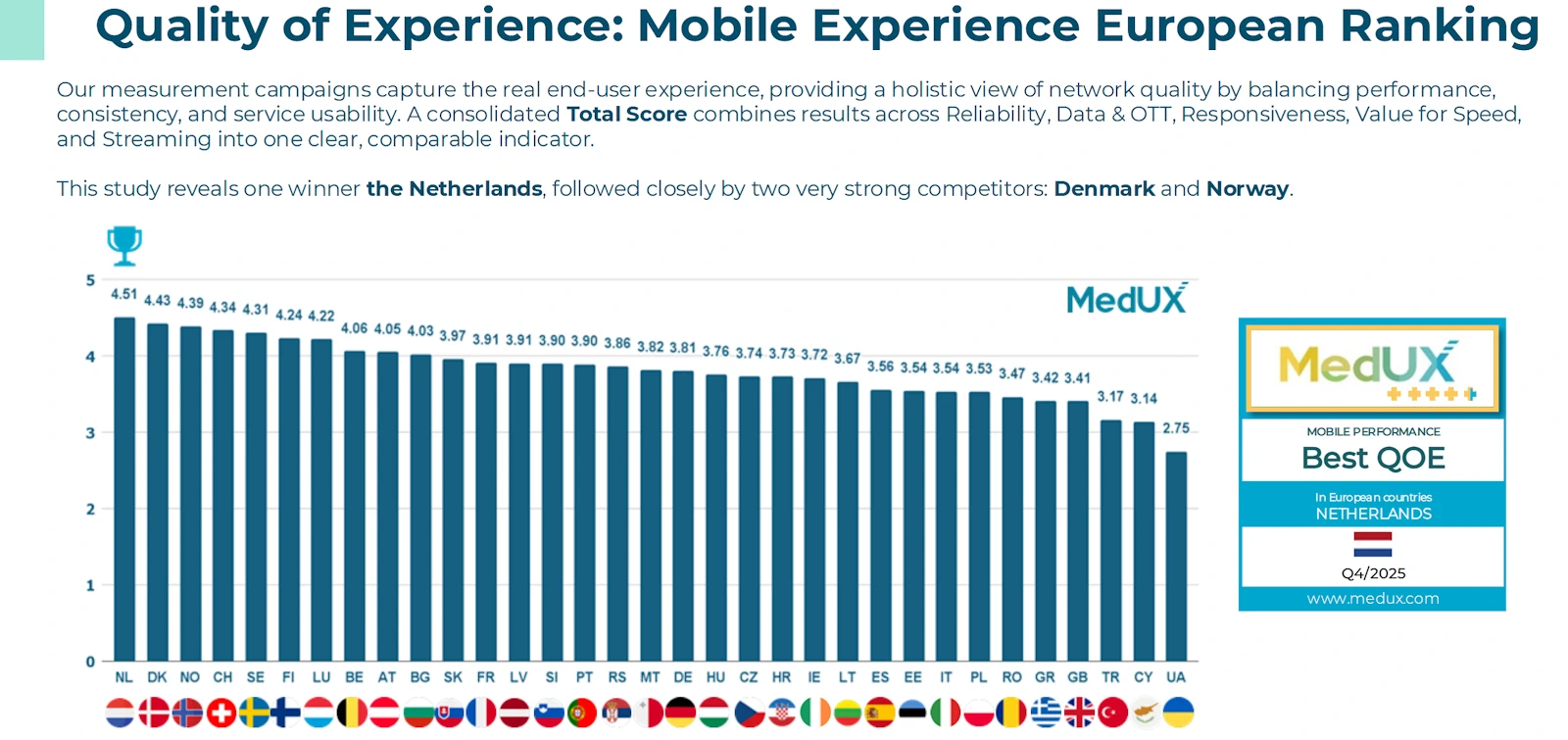
The research reveals that the Netherlands leads the region for overall QoE, a measure of user satisfaction, scoring 4.51 out of 5. Denmark and Norway follow closely behind as strong competitors, with Switzerland completing the top tier of European mobile network performance.
Sadly, Great Britain continues to lag behind most of the other countries and tends to appear within the bottom quarter of all the scoring categories. For example, we place fourth from the bottom in MedUX’s overall QoE table, scoring just 3.41, which compares poorly with the Netherlands in top place with 4.51.
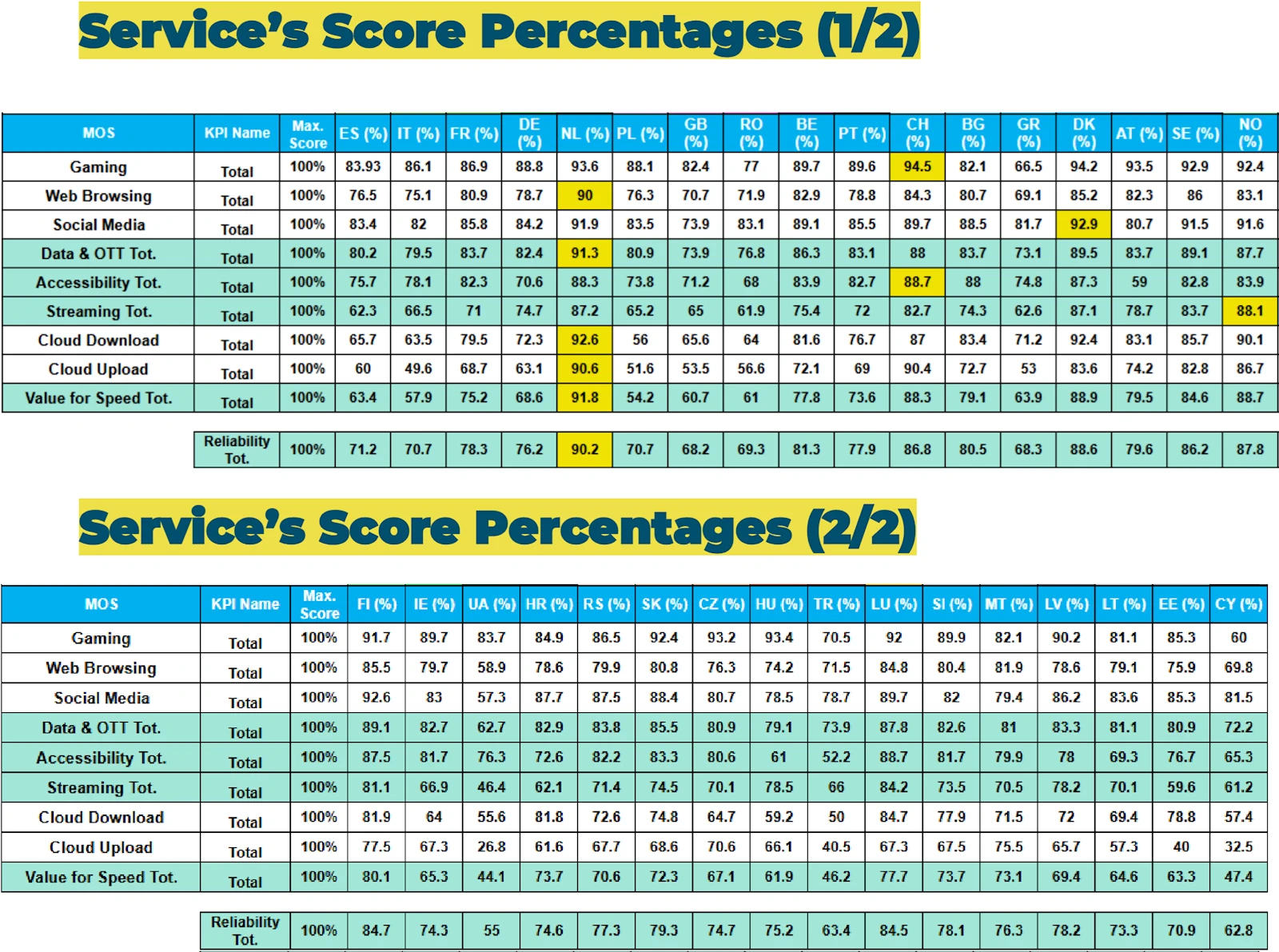
You can get a better idea of where Great Britain places by looking at the total reliability (% out of 100) scores for each of the main performance categories by country.
The UK’s poor situation tends to reflect a combination of issues, such as the previous government’s U-turn to ban Huawei, which caused a significant and costly delay to network deployments – particularly 5G. Mobile operators have also faced restrictions when it comes to upgrading existing masts to 5G and deploying new ones, although recent rule changes may soon start to improve the planning process a bit.
Speaking of the government, both the past and present governments have had a tendency to set some rather easy coverage targets for the latest services, which is because they mostly end up relying on commercial investment to do the job.
For example, the current government retains an ambition “for all populated areas” to have access to the latest 5G Standalone (5G+) based mobile broadband technology by 2030, although this sort of language is potentially open to interpretation and not as effective as a clear geographic target for coverage.
Ofcom recently reported (here) that 5GSA (5G+) networks are now available to 83% of areas outside of premises in the UK, falling to 47%-65% when looking at it as a range across different mobile operators. On top of that, the regulator itself could have also been faster to release more 5G friendly radio spectrum in order to boost capacity and coverage (e.g. we only just got around to releasing the 26GHz and 40GHz bands a few months ago).
At the end of the day, we’ve clearly got some work to do in order to improve mobile network coverage and performance.